Patio Heaters: Propane, Electric and Infrared Explained
Choose a propane patio heater for flexible placement on an open patio, or electric infrared for focused warmth near suitable power. Match the heater to your seating layout, fuel routine and the model's approved placement and clearances.
On this page (12 sections)
- Which patio heater type should you choose?
- How does propane compare with electric infrared?
- What does infrared heat feel like outdoors?
- How much patio heater output do you need?
- Can you put a patio heater under a covered patio?
- Which patio heater shape fits your space?
- How should you prepare a patio heater for its first use?
- What safety checks matter during use?
- How do fuel use and session length affect the choice?
- How should you clean and store a patio heater?
- Which patio heater buying mistakes should you avoid?
- Which patio heater should you choose?
Choose a propane patio heater for an open patio where you want flexible placement, or electric infrared for focused warmth near suitable power. For a small outdoor table, a compact tabletop model can make more sense than a floor-standing tower.
Start with the seats you want to warm, then check fuel access, heat direction and safe placement. A heater that fits those needs is more useful than one chosen only for its output or appearance.
Which patio heater type should you choose?
Choose the type that fits your seating layout and available fuel or power. Standing propane suits an open gathering area, tabletop propane suits a small table, and electric infrared suits a defined seating spot near an appropriate outlet.
| Type | How it supplies heat | Who it suits | Main reason to skip it |
|---|---|---|---|
| Standing propane | A gas burner and reflector send heat around a freestanding unit | People who rearrange open-patio seating or lack nearby power | You cannot handle or store a propane cylinder safely |
| Pyramid propane | A visible flame tube adds radiant warmth and a flame display | Buyers who want the heater to be part of the patio's appearance | You mainly want heat and do not value the flame display |
| Tabletop propane | A compact burner brings heat close to a table | A small group that can spare safe table space | The table is crowded, unstable or too small for clearances |
| Electric infrared | An electric element directs radiant heat toward people and surfaces | People who use the same seats near suitable outdoor power | The cord would cross a walkway or the power supply is unsuitable |
Infrared describes heat transfer, while propane and electricity are energy sources. A propane heater also radiates heat, so “infrared versus propane” is usually shorthand for comparing electric infrared with gas-powered models.
Decide where the heater can safely stand before choosing its shape. A narrow patio may have enough room for a base but too little space around the hot parts, furniture and walking routes.
For a closer explanation of radiant heat, combustion and reflector design, read how a patio heater works.
How does propane compare with electric infrared?
Propane offers placement away from an outlet; electric infrared avoids cylinder changes. The better choice depends on which routine is easier in your space: handling fuel or providing suitable electrical power.
When does a propane patio heater make sense?
Propane makes sense when your outdoor seats move around, the nearest outlet is awkward to reach, or you want a freestanding heater in an open area. You need a safe route for carrying the cylinder and a permitted place to keep it.
Fuel handling becomes part of each evening's setup. Check the supply before guests arrive, keep the cylinder secured as instructed, and allow the heater to cool before repositioning it.
Who should choose the Amazon Basics heater?
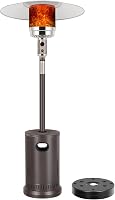
The Amazon Basics model suits buyers who want an adjustable, freestanding propane heater for an open patio. It combines one-touch ignition, wheels and an output knob with a 46,000 BTU burner.
Amazon Basics claims coverage up to a 9 ft radius. Its tilt shutoff, tank-securing chain and water box for base weight address practical setup needs, but they do not make an exposed or uneven location suitable.
It requires a separate 20 lb propane tank and measures about 32.1 x 32.1 x 91.3 in. Measure the route to its storage spot as well as the operating space, especially if gates, steps or patio furniture restrict movement.
Skip it if carrying cylinders is difficult or the only available location sits beneath a low roof. Its wheels help with positioning, but a tall heater still needs a level surface and the clearances in its manual.
See our propane versus electric patio heater comparison for a direct choice by placement and daily use.
When does electric infrared make sense?
Electric infrared suits a bench, pair of chairs or dining spot that stays in one place near suitable power. You can direct warmth toward the people using that area without arranging propane refills.
The trade-off is location. A convenient seat does not become a suitable heater position if the cord cannot reach safely or the electrical circuit cannot support the load.
Who should choose the Haimmy heater?
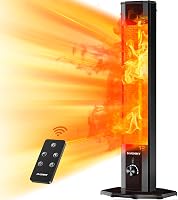
The Haimmy tower suits buyers who want remote control and several heat settings for a defined seating area. Its 9 levels run from 620 to 1,500 W, allowing you to reduce output when full heat is unnecessary.
It also includes a 1 to 9 hour timer, a control lock, and tip-over and overheat protection. The timer is useful for setting a session length, but it does not replace supervision or proper shutdown.
Haimmy approves this model for indoor and outdoor use and specifies IPX5 water resistance. Follow its weather-exposure instructions and protect the electrical connection as directed; the heater's water resistance does not apply automatically to the outlet.
Skip it if your seating is scattered across a large patio or the only cord route crosses a busy path. A control lock also does not prevent someone from touching a hot surface, so placement still matters around children and pets.
Read infrared versus propane patio heaters if you have narrowed your options to those two types.
What does infrared heat feel like outdoors?
Infrared heat warms people and objects in its path, so you can feel warmth without heating the whole patio's air. Moving away from the heater's direction or farther from it can reduce that warmth.
Think about which side of your body faces the heater. A unit beside a chair may warm one side more than the other, while a table, planter or chair back can interrupt part of the heat path.
A large outdoor area does not behave like an enclosed room. Heat escapes into the surroundings, and wind increases heat loss from your body even when radiant warmth still reaches you.
How should you position an infrared patio heater?
Position an infrared patio heater so its heating area reaches the seats you actually use. Follow the permitted orientation and clearances rather than tilting or raising a floor model to change its aim.
For 2 lounge chairs, consider whether both people can face the heater comfortably. For a dining table, check whether the tabletop blocks warmth that would otherwise reach seated legs.
Leave room for normal movement. A heater positioned perfectly for empty chairs may become awkward once someone pulls out a seat, carries a tray or walks behind the table.
How much patio heater output do you need?
Choose output around the occupied seating zone, rather than the total size of your yard or deck. Start with the farthest seat you want to warm and the safe positions available for the heater.
A standing propane unit can suit chairs arranged around a central point. A directional electric heater can suit seats facing the same way, while a tabletop unit serves people close to a small table.
Read coverage units before comparing heaters
A radius runs from the center to the edge, while a diameter runs across the whole circle. A 9 ft radius describes an 18 ft diameter, so it is not smaller than a 15 ft diameter.
Square footage describes area rather than reach in one direction. It can help compare broad coverage claims, but it does not show whether your long, narrow seating arrangement fits the heating pattern.
Brand coverage claims are useful starting points, not promises of equal comfort at every seat. Cold weather, wind, distance and furniture can all reduce useful warmth.
BTU and watt figures also use different units. Do not compare the raw numbers as though a larger number automatically means better warmth for your particular arrangement.
Who should choose the Cuisinart tabletop heater?
The Cuisinart model suits a small group that wants nearby warmth and can spare a clear section of a stable outdoor table. It has 11,000 BTU output, an adjustable dial, a burner screen guard and a tilt shutoff.
Cuisinart claims coverage up to 30 sq ft. That makes it a choice for a compact seating zone rather than a substitute for a standing heater serving widely spaced chairs.
It uses a 1 lb propane tank, or a 20 lb tank with an optional regulator that is not included. The larger-cylinder setup can suit longer sessions, provided the connection and hose arrangement follow Cuisinart's instructions.
Skip it if the table is already full of plates, decorations or serving dishes. A compact heater still needs room around its hot parts, and a burner guard does not make those parts safe to touch.
Who should choose the Pamapic pyramid heater?
The Pamapic model suits buyers who want a visible flame column as part of an open patio's appearance. Its quartz glass tube sits within a tall pyramid design, and Pamapic claims coverage up to a 15 ft diameter.
It uses a separate 20 lb propane tank, with pulse ignition and a side-access door for cylinder changes. Wheels, a weighted base and an included cover support moving, positioning and storage between uses.
Its safety features include tip-over shutoff, flame-failure protection and an overheat guard. Keep the glass tube and surrounding hot surfaces clear of people and objects despite those shutoffs.
Skip it if you do not value the flame display or need a heater that is easy to carry. At 61.7 lb, it calls for a practical storage route, and its shape does not justify placing it closer to furniture.
Use the guide to choose the right patio heater size to compare seating area, output and layout. For more options, see our best propane patio heaters and best electric patio heaters.
Can you put a patio heater under a covered patio?
Use a patio heater under a roof only if its manual permits that placement and you meet every requirement. A high ceiling or open sides alone do not establish that a location is suitable.
Measure from the points identified in the instructions, including the upper heat source or reflector where required. Do not measure only from the base and assume the rest of the heater fits.
Check beams, roof panels, gutters, curtains, hanging baskets and nearby walls. A clear spot at floor level may have combustible materials above it or fabric that can blow toward the heater.
For propane, the space must also meet the model's ventilation requirements. Do not close curtains, screens or panels around an operating heater to hold in warmth if that changes the permitted setup.
An electric heater avoids combustion at the seating area, but its hot surfaces still need clearance. The roof also does not guarantee that wind-driven rain cannot reach the heater or its power connection.
Our guide to using a patio heater under a covered patio covers the measurements and manual checks. For propane models, also see why patio heaters should not be used indoors.
Which patio heater shape fits your space?
Choose the shape that leaves safe room for both heat and movement. Floor models occupy walking space, tabletop models occupy serving space, and approved wall-mounted units require a suitable fixed mounting location.
Standing heaters need more than a base-sized gap
Standing propane heaters suit seats arranged around an open area. Plan enough room for guests to pull out chairs without approaching hot surfaces or blocking access to the controls.
For a heater with a base-weight system, add weight only as the manual directs. Do not hang bags from the pole or improvise ballast that could interfere with the burner, tank compartment or shutoff.
Pyramid heaters need a clear view and clear surroundings
A pyramid heater makes the most sense where people can enjoy the flame without gathering too close. Avoid putting it in a narrow passage simply because the base fits between furniture.
Place the tank-access side where you can reach it without dragging the heater around. This makes routine fuel checks easier and reduces the temptation to move a warm unit.
Tabletop heaters need a suitable table
A tabletop heater needs a level, stable surface that can support it and meets its placement instructions. A folding table that rocks when someone leans on it is a poor starting point.
The Cuisinart model is 25.3 in high and weighs 8.5 lb. Check overhead space as well as tabletop space, especially around umbrellas and low branches.
Wall-mounted heaters need a planned heat direction
An approved wall-mounted electric heater can keep the floor clear and direct warmth toward fixed seating. Check the wall structure, permitted mounting angle, height and electrical requirements before buying.
A mount on a convenient wall may point heat across an empty walkway rather than toward chairs. Plan around seated people, not just an open section of wall.
See our wall-mounted patio heater guide for options and placement questions.
How should you prepare a patio heater for its first use?
Prepare the location, fuel or power supply and assembly area before starting the heater. Keep the exact manual nearby so you can follow its order for assembly, checks, ignition and shutdown.
Set up the seating area first
Arrange the chairs and table as they will be used, then identify a level heater position. Check clearances with seats pulled out and account for doors, gates and common walking routes.
If the heater will sit on a deck, confirm that the surface and location meet its placement instructions. Our outdoor heaters for decks guide covers the layout questions that come with deck use.
Prepare a propane heater without rushing
Inspect the cylinder, hose and connection points as directed before connecting the fuel. Keep the cylinder upright, secure it using the heater's intended system, and check connections for leaks using the manual's method.
Never use a flame to check for leaks. If you smell gas, stop the setup and follow the manufacturer's gas-leak instructions rather than trying another ignition attempt.
Follow the specified lighting sequence, including any waiting period after a failed start. Repeatedly pressing the igniter while changing the controls is not a substitute for those steps.
Read how to light a patio heater before the first evening of use.
Check the electrical supply before plugging in
Use a compatible outdoor power source with GFCI protection as required. The Haimmy's maximum draw is 12.5 A, so account for other equipment sharing that circuit.
Plug directly into a suitable wall outlet and follow the manual's electrical requirements. Do not use a power strip or improvise a long cord route to reach a preferred seat.
Keep the cord clear of hot surfaces, doors and walking paths. If a plug, cord or outlet shows damage or becomes unusually hot, switch the heater off and stop using that connection.
What safety checks matter during use?
Keep the heater stable, clear and supervised throughout the session. Automatic shutoffs help address specific faults, but they do not make poor placement acceptable.
Keep children, pets, blankets and loose clothing away from hot parts. Recheck the area when guests move chairs or someone adds a tablecloth, umbrella or extra seating.
Do not move an operating heater. Switch it off, follow the shutdown procedure and let it cool fully before using its wheels or handle.
Stop using the heater when wind threatens its stability or exceeds the manual's permitted conditions. Moving it into an enclosed shelter to keep the evening going creates a different hazard for an outdoor-only propane model.
Never bypass a tilt switch or other protective control to keep a heater running. Repeated shutoffs call for checking the permitted setup and following the fault guidance.
See how to keep a patio heater from tipping over for help planning a stable position. Before leaving the area, complete the full shutdown procedure, including the fuel valve where instructed.
How do fuel use and session length affect the choice?
Choose a fuel setup that fits how long and how often you sit outside. Short visits favor simple setup, while regular long evenings make refill access and electrical supply more important.
A propane heater's runtime depends on cylinder size and burner setting. Turning the heat down can reduce fuel use, but do not choose an undersized heater expecting it to feel comfortable at its lowest setting.
A small cylinder is easier to carry, yet it may need changing more often than a larger one. For a tabletop heater, decide whether portability or fewer cylinder changes matters more before adding an approved larger-tank connection.
Read how long a patio heater propane tank lasts to plan fuel around session length.
For electric heat, estimate energy use from the selected power level and time. A heater running continuously at 1,500 W uses 1.5 kWh in an hour; multiply that by your electricity rate to estimate the energy charge.
Choose a lower setting when it provides enough warmth, and turn the heater off when the seating area is empty. A timer can help manage a session, but it should not determine whether the heater is safe to leave running.
How should you clean and store a patio heater?
Clean and cover the heater only after shutdown and full cooling. Follow the manual for cleaning the reflector, burner area, glass, guards or electric element rather than treating every surface the same way.
Keep vents and burner openings clear of debris using the permitted method. Do not push objects into small openings or remove protective parts unless the instructions call for it.
Inspect hoses, cords, fasteners and visible parts before seasonal use. Replace damaged components with suitable parts instead of covering cracks, loose connections or worn wiring with tape.
A cover helps keep dirt and weather off a stored heater, but it does not make an unsuitable outdoor storage location safe. Avoid trapping moisture beneath the cover, and secure it as directed so it cannot catch the wind.
For a model with glass, let the tube cool before cleaning and use the approved approach. Do not spray cold water onto hot glass.
Follow the separate storage instructions for the heater and propane cylinder. Keep cylinders upright in a permitted outdoor location, away from heat, rather than moving them into a living space for convenience.
Our guide to choosing and using a patio heater cover explains what to check before covering a cooled unit.
Which patio heater buying mistakes should you avoid?
Avoid choosing by output, appearance or footprint alone. The most useful heater is one you can place safely and use without rearranging the patio every time.
- Comparing coverage without reading the units. Radius, diameter and square footage describe different things.
- Heating empty space. Focus on occupied seats rather than the far corner of the deck.
- Treating wheels as permission to move a hot heater. Let it cool and follow the moving instructions.
- Choosing a tabletop model for a crowded table. Allow room for both clearances and normal dining.
- Assuming water resistance protects the whole electrical setup. The outlet, plug and cord need suitable protection too.
- Buying for a roofed space before checking the manual. Confirm approved placement before considering controls or appearance.
- Expecting shutoffs to prevent every hazard. They do not keep fabric away, supervise children or secure a poor location.
Before ordering, walk through a complete evening: bring out the heater, connect it, seat everyone, shut it down and put it away. That simple exercise often reveals a difficult tank route, blocked doorway or awkward storage space.
Which patio heater should you choose?
Choose the Amazon Basics standing propane heater when your priority is flexible placement around an open seating area and you can manage a full-size cylinder. Choose the Pamapic pyramid when the visible flame is a feature you value and you have room for a tall tower.
Choose the Cuisinart tabletop heater for a small group with a stable, uncrowded table. Choose the Haimmy electric infrared tower for a fixed seating spot near suitable power where remote control and adjustable heat levels will be useful.
If the only available position fails the clearance, ventilation or electrical requirements, change the location or heater type before buying. Extra output cannot solve an unsuitable setup.
Measure the space, choose the seats that matter most, then use our propane and electric patio heater comparison to settle the fuel choice. Your patio heater should fit both the evening you want and the setup you can safely maintain.
Frequently asked questions
What type of patio heater is best?
Choose propane for an open patio where you want placement away from an outlet, or electric infrared for a fixed seating spot near suitable power. Tabletop propane suits a small group with enough table space; the best choice must also meet the exact model's clearance, ventilation and power requirements.
Are infrared patio heaters better than propane?
Electric infrared is a better fit for focused warmth without propane tank changes, while propane suits seating away from an outlet. Infrared describes heat transfer rather than fuel, so propane heaters also radiate warmth; compare your seating layout, power access and fuel routine before choosing between them.
Can you use a patio heater under a covered patio?
Use a patio heater under a covered patio only if its manual permits that placement and you meet every clearance and ventilation requirement. Measure from the heater to the roof, beams, walls and nearby fabric; open sides or a high ceiling alone do not establish that the location is suitable.
Can you use a patio heater indoors?
Never use an outdoor-only propane patio heater indoors or in an enclosed space, because burning propane can produce carbon monoxide. For indoor warmth, choose a heater explicitly approved for indoor use; follow that model's instructions for placement, electrical supply and clearances, even if it is also approved for outdoor use.
How much space does a patio heater warm?
A patio heater's useful reach depends on its design, seating distance, wind and surroundings. Use the brand's coverage claim to compare models, then check whether your seats fit within that layout; a radius, diameter and square-foot figure describe different measurements, so read the units before comparing coverage.