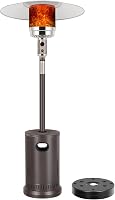
How Long Does a Propane Tank Last on a Patio Heater?
A patio heater propane tank lasts about 9 hours with 20 lb of propane and a 46,000 BTU heater on high. Lower heat settings can extend runtime, while a partly filled tank gives you fewer hours.
On this page (8 sections)
- How long does a patio heater propane tank last?
- How do you calculate runtime from tank weight and BTUs?
- Which heater suits your patio and fuel plan?
- Can a propane tank gauge predict when the heater will stop?
- How should you set up the heater before an evening outside?
- How can you stretch a tank without losing useful warmth?
- What mistakes make a tank seem to empty too soon?
- How long should you plan for your patio heater propane tank to last?
A patio heater propane tank lasts about 9 hours with 20 lb of propane and a 46,000 BTU heater on high. A higher-output heater uses that fuel faster, while turning the heat down can stretch your supply.
The useful question is how many evenings you'll get before a refill. Start with the propane actually in the cylinder, then match your fuel plan to the heat setting and hours you expect to use.
How long does a patio heater propane tank last?
A tank containing 20 lb of propane holds roughly 430,000 BTU of fuel energy. That gives about 9.3 hours at 46,000 BTU per hour or 8.6 hours at 50,000 BTU per hour.
These figures assume continuous use at full output. They describe fuel capacity, not a guaranteed number of comfortable hours in every outdoor space.
| Propane in the tank | At 46,000 BTU per hour | At 50,000 BTU per hour |
|---|---|---|
| 20 lb | About 9.3 hours | About 8.6 hours |
| 15 lb | About 7 hours | About 6.5 hours |
| 10 lb | About 4.7 hours | About 4.3 hours |
For planning, a full cylinder can cover about 3 evenings of 3 hours each on the lower-output example, with little reserve. Don't stretch that estimate to a fourth evening without checking the remaining fuel.
A cylinder's capacity doesn't prove how much propane it contains. Check the stated net fill when exchanging a tank, especially if your runtime plan depends on starting with the full amount.
How do you calculate runtime from tank weight and BTUs?
Divide the fuel's estimated energy by the heater's hourly input. Use about 21,500 BTU per lb of propane for a simple planning calculation.
Estimated hours = propane weight in lb × 21,500 ÷ heater BTUs per hour.
Use the maximum BTU rating when planning to run the heater on high. For lower settings, use a stated fuel-consumption rate if the heater manual provides one.
A knob turned halfway doesn't necessarily mean half the propane use. Avoid promising yourself double the runtime based only on the knob position.
See how much propane a patio heater uses for more help connecting fuel consumption to your usual heating schedule.
How long will a partly used propane tank last on a patio heater?
A partly used tank lasts in proportion to the propane remaining, assuming the same heat setting. To estimate that amount, weigh the disconnected cylinder and subtract the empty-cylinder weight marked TW, or tare weight.
For example, a cylinder weighing 27 lb with a tare weight of 17 lb contains about 10 lb of propane. Use a suitable scale, keep the cylinder upright, and follow the heater's shutdown instructions before disconnecting it.
Which heater suits your patio and fuel plan?
Choose a heater that warms your seating area at a useful setting, rather than choosing by the longest calculated runtime alone. A smaller burner saves little if you must run it constantly on high and still feel cold.
Amazon Basics: for adjustable heat around a home patio
The Amazon Basics model suits buyers who want adjustable output, one-touch ignition, and wheels for moving the cooled heater into position. It requires a 20 lb liquid propane tank, which isn't included.
Its water-weighted base and tank-securing chain help with setup. Amazon Basics describes coverage up to a 9-foot radius, but wind and seating position affect how much warmth reaches you.
Skip it if your space can't meet the manual's clearances or you want to avoid cylinder refills. Our Amazon Basics patio heater review goes into the model's fit for a home patio.
Hykolity: for buyers who want more maximum output
The Hykolity suits buyers who want a higher maximum heat output and an adjustable control valve. Its wheels help with positioning, and its weight-adjustable base provides ballast when filled as instructed.
It also has a double-layer stainless steel burner mesh and tilt protection. Those features don't remove the need for level ground, correct clearances, or shutting down in unsuitable weather.
Skip it if your main goal is longer runtime at full power. Its higher output draws fuel faster, so buy it because your patio needs the heat, not because you expect more hours per cylinder.
Can a propane tank gauge predict when the heater will stop?
A pressure-based gauge gives a rough refill cue, not an accurate countdown. While liquid propane remains, pressure depends strongly on temperature and doesn't fall steadily with each hour of use.
Cold weather can lower the reading without using any fuel. It can also limit how quickly propane vaporizes, so weak heat doesn't always mean an empty tank.
Dozyant: for quick checks between refills
The Dozyant suits buyers who want a color-coded dial without removing the cylinder each time. It fits 5 lb to 40 lb tanks with a QCC1 / Type 1 connection and attaches by hand.
DOZYANT describes its reading as an estimate and notes that temperature changes the result. Skip it if you need a precise fuel quantity for a long event; weighing the tank is more useful for that job.
Calpose: for an easy-to-read color indicator
The Calpose suits buyers who prefer a larger color-coded display and a hand-tightening knob. Its brass construction and connection range make it another option for compatible cylinders.
Choose one gauge, rather than buying both for the same heater. Skip this option too if you expect exact remaining hours, and check that any added fitting fits inside the tank compartment without straining the hose.
How should you set up the heater before an evening outside?
Set the heater on firm, level ground, fill its ballast as instructed, and confirm the required clearances before connecting fuel. Keep the cylinder upright and secure it using the heater's tank restraint.
With the appliance off and cool, inspect the hose and connections for damage. After a cylinder change or adding a gauge, follow the manual's leak-check procedure using an approved leak-detection solution, never a flame.
Keep propane patio heaters outdoors, away from enclosed spaces. Read our guide to using a patio heater under a covered patio before placing one beneath a roof.
Follow how to light a patio heater alongside your model's instructions. If you smell gas, stop using the appliance and follow its emergency procedure.
How can you stretch a tank without losing useful warmth?
Turn the heat down once your seating area feels comfortable, and shut the heater off when nobody needs it. Shortening unnecessary run time gives more predictable savings than guessing what each knob position burns.
Place seating where warmth reaches people while keeping all required clearances. Don't move the heater while it's lit or hot, and don't enclose the patio to trap heat.
Keep burner openings and air inlets clear according to the manual. Let the heater cool before cleaning or covering it, and don't poke tools into gas openings or modify the burner.
For frequent, short sessions near a suitable power source, compare propane and electric patio heaters. Avoiding refills may matter more to you than getting the longest possible life from each cylinder.
What mistakes make a tank seem to empty too soon?
The biggest planning mistakes are assuming every cylinder starts full and treating a pressure gauge as a fuel meter. Write down your starting fuel weight and running hours if you want a better estimate for your own routine.
Don't assume a weak flame proves the tank is empty. Cold conditions, regulator issues, or restricted fuel flow can interrupt heat while propane remains.
Follow the manual before trying another start. Our guide to why a patio heater won't stay lit explains common causes; never bypass a safety control to keep the burner running.
How long should you plan for your patio heater propane tank to last?
Plan how long your patio heater propane tank will last from starting fuel weight, heat setting, and event length. For a gathering close to the calculated limit, arrange a properly stored spare rather than relying on the final fraction of a tank.
Choose Amazon Basics for adjustable patio heat, or Hykolity when extra maximum output matters more than full-power runtime. Choose either gauge for quick checks, and weigh the cylinder when remaining hours matter.
If you're still choosing a heater style, start with patio heaters: propane, electric and infrared explained. Then use our best propane patio heaters guide to compare models against your space and refill routine.
Frequently asked questions
How long will a 20 lb propane tank run a patio heater?
A tank containing 20 lb of propane gives about 9 hours on a 46,000 BTU patio heater at full output. A 50,000 BTU heater gives about 8.6 hours from the same fuel supply, while lower heat settings can extend either estimate; check the starting fill before planning an evening.
Does a patio heater use more propane on high?
Yes, a patio heater burns more propane on high than on a lower setting. Use its maximum BTU rating to estimate full-output runtime, but don't assume the halfway knob position means half the fuel use; you need a stated consumption rate to calculate a lower setting accurately.
Can a propane gauge tell me exactly how many hours remain?
No, a pressure-based propane gauge can't tell you exactly how many hours remain. Temperature changes its reading, and tank pressure doesn't fall evenly as liquid propane is used; weigh the cylinder and subtract its marked tare weight for a better estimate of the propane left inside.
Why did my patio heater tank run out sooner than expected?
The tank may have started partly full, or you may have used a higher heat setting than planned. A weak flame can also reflect a fuel-delivery problem rather than an empty cylinder; if fuel remains, follow the manual and our guide to why a patio heater won't stay lit.