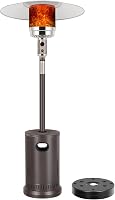
How Much Propane Does a Patio Heater Use?
How much propane a patio heater uses depends on its heat setting: a 40,000 BTU heater burns about 0.44 gallons per hour at full output. A full 20 lb propane fill provides roughly 10.8 hours at that rate.
On this page (8 sections)
- How much propane does a patio heater use per hour?
- How do you calculate fuel for an evening?
- What changes propane use on your patio?
- Which heater suits your fuel needs and seating area?
- Can a propane tank gauge tell you when to refill?
- How should you set up and care for a propane heater?
- Which mistakes waste propane or spoil an evening?
- How much propane should you plan for your heater?
A patio heater rated at 40,000 BTU uses about 0.44 gallons of propane per hour at full output. How much propane a patio heater uses over an evening depends mainly on its heat setting and how long you leave it running.
Start with the heater's maximum BTU rating, then plan enough fuel for your whole gathering. A smaller fuel bill comes from choosing heat that fits your seating area and turning it down when you're comfortable.
How much propane does a patio heater use per hour?
A typical full-size propane patio heater burns about 0.44 to 0.55 gallons per hour at full output across the ratings below. Divide its hourly BTU rating by 91,500 to estimate gallons used per hour.
| Maximum heat output | Propane per hour | Runtime with a full 20 lb fill |
|---|---|---|
| 40,000 BTU | About 0.44 gallons | About 10.8 hours |
| 46,000 BTU | About 0.50 gallons | About 9.4 hours |
| 50,000 BTU | About 0.55 gallons | About 8.6 hours |
These figures assume continuous maximum output and about 4.7 gallons in a full 20 lb propane fill. Runtime calculations use the unrounded consumption figures.
How much propane does a patio heater use on low?
Low heat uses less propane, but there isn't one low-setting rate that applies to every model. A halfway knob position doesn't necessarily cut fuel use in half.
For a useful personal estimate, record operating hours and weigh the cylinder before and after several evenings. Compare evenings with similar settings rather than mixing low-heat dinners with full-output parties.
How do you calculate fuel for an evening?
Multiply hourly consumption by operating hours, then allow a reserve if guests may stay longer. Use maximum output for a cautious plan when you don't yet know your usual setting.
For example, a 50,000 BTU heater running for 3 hours at full output uses about 1.64 gallons. Three evenings at that rate would need about 4.92 gallons, slightly more than a full 20 lb fill.
Two heaters double that demand if both run at the same output for the same time. Include every heater in your plan rather than estimating fuel for the patio as one unit.
Check the actual propane weight before relying on a cylinder marked “20 lb.” That describes its propane capacity, not the fuel currently inside.
Our guide to how long a propane tank lasts on a patio heater covers runtime in more detail. For the heat process behind these numbers, read how a patio heater works.
What changes propane use on your patio?
Heat setting and operating time control fuel consumption. Wind and seating layout affect comfort, which can lead you to turn the burner higher or leave it running longer.
Wind doesn't automatically increase the burn rate at an unchanged setting. It can carry warmth away, making the same fuel use feel less useful.
Keep chairs within a comfortable heating area while maintaining every clearance in the manual. A claimed coverage area isn't a promise that everyone at its outer edge will feel equally warm.
Avoid sizing a heater by the patio's total area when you only use one seating group. Our guide to what size patio heater you need helps connect heater choice to the space you actually occupy.
Which heater suits your fuel needs and seating area?
Choose by seating layout and useful features first, then compare maximum fuel demand. The difference between the heaters below matters less if you routinely run either one below full output.
Amazon Basics for a simple seating setup
The Amazon Basics heater suits buyers who want adjustable warmth, push-button ignition, and wheels without needing a table-style tank lid.
It takes a separate 20 lb propane tank and includes a tank-securing chain, a water box for base ballast, and a tilt shutoff. Its powder-coated exterior comes in Slate Gray.
Choose it for a patio where you can give a tall freestanding heater enough room. Skip it if your main need is a compact heater beside a small table or if you can't meet the required overhead clearance.
Hykolity for gatherings with room for a floor heater
The Hykolity suits buyers who want higher maximum output plus a double-layer 304 stainless steel burner mesh, wheels, and an adjustable control valve.
Its conical tank housing includes a weight-adjustable ballast tank, and its tilt protection shuts off the flame beyond 45 degrees. Fill and secure the base as directed before use.
Choose it when those features fit an open seating area. Skip it if you're choosing solely to save propane: its maximum rating gives it the same estimated full-output fuel demand as the EAST OAK below.
EAST OAK for seating that needs a small side surface
The EAST OAK suits buyers who value its stainless steel round table lid and access hole for closing the tank valve without lifting the housing.
It also has a double-layer stainless steel burner mesh and a conical base with adjustable ballast. Treat the table lid as a convenience, and follow the manual's limits for objects near heated surfaces.
Skip it for a spot exposed to rain or frequent strong winds; EAST OAK advises against rainy-day use and use during storms. Compare these choices in our best propane patio heaters guide.
Can a propane tank gauge tell you when to refill?
A pressure gauge can't reliably measure remaining propane while liquid fuel is present. Temperature affects pressure, so colored zones aren't dependable fractions of a full tank.
The Calpose gauge suits someone who specifically wants a compatible pressure indicator. Skip it if your goal is to know how many pounds remain or exactly how many heating hours you have left.
For that job, weigh the disconnected cylinder and subtract its stamped tare weight, often marked “TW.” If the total is 25 lb and the tare weight is 17 lb, about 8 lb of propane remains.
Turn off and disconnect the cylinder according to the manual before weighing it. After reconnection, follow the prescribed leak-check procedure; the gauge doesn't replace that check.
How should you set up and care for a propane heater?
Place the heater on a stable, level surface with all required clearances, then complete the assembly and connection checks in its manual. Keep it outdoors with the ventilation the manufacturer requires.
Check clearance above the reflector as well as around the sides. Don't move a heater beneath an awning or close it inside temporary walls to keep warmth in.
Fill the ballast compartment as directed and secure the cylinder before lighting. Inspect the hose and connections for damage, and use the manual's leak-check method rather than a flame.
Keep the burner and air openings free of debris using the care instructions. If the flame becomes unusual or the heater repeatedly goes out, shut it down and find the cause before using it again.
After use, follow the shutdown sequence and let the heater cool before moving or covering it. For placement around deck furniture and walking routes, see our guide to outdoor heaters for decks.
Which mistakes waste propane or spoil an evening?
Running more heat than your seating needs and misjudging the fuel left are the main planning mistakes. A few simple habits prevent both.
- Leaving it on during indoor breaks: Shut it down when nobody is using the patio.
- Starting with an unknown fill: Weigh the cylinder before a long gathering instead of relying on how heavy it feels.
- Treating ballast as wind protection: A weighted base doesn't make every weather condition suitable for operation.
- Moving chairs too far away: Arrange seating for useful warmth while preserving safe clearances and access.
- Planning to use every last drop: Keep enough reserve for an extra hour or a longer evening.
- Chasing warmth in unsuitable conditions: Turn the heater off when wind makes use unsafe or ineffective.
If frequent refills don't suit your routine, compare propane and electric patio heaters. Fuel storage, outlet access, and the seating area all matter when choosing between them.
How much propane should you plan for your heater?
Plan propane use from maximum output until you know your normal routine. Then use your own fuel-weight and operating-hour records to estimate how much propane your patio heater uses at your preferred setting.
Pick Amazon Basics for straightforward adjustable heat, Hykolity for its burner and ballast features, or EAST OAK when the table lid and valve access solve a practical need. Choose the Calpose gauge only as a pressure indicator, with weighing as your fuel check.
Before your next gathering, check the cylinder and calculate the hours you need. Use our propane tank runtime guide to match the remaining fuel to your evening.
Frequently asked questions
How much propane does a patio heater use per hour?
A 40,000 BTU patio heater uses about 0.44 gallons of propane per hour at full output, based on roughly 91,500 BTU per gallon. A 50,000 BTU model uses about 0.55 gallons per hour.
Lower heat settings reduce consumption, but a halfway knob position doesn't necessarily mean half the fuel use.
How long does a 20 lb propane tank last on a patio heater?
A full 20 lb propane fill gives roughly 10.8 hours at 40,000 BTU, 9.4 hours at 46,000 BTU, or 8.6 hours at 50,000 BTU with continuous full output. These estimates assume about 4.7 gallons of fuel; check the actual fill amount rather than relying on the cylinder's size.
Does a patio heater use less propane on low?
Yes, lowering the heat output reduces propane use per hour and extends tank runtime. There isn't a universal consumption rate for the low setting, so use maximum output when planning fuel for a gathering, then track fuel weight and operating hours to learn your heater's usual rate.
How can I tell how much propane is left in the tank?
Weigh the disconnected tank and subtract its stamped tare weight, which is its empty weight, to estimate the pounds of propane remaining. A pressure gauge doesn't reliably measure the amount while liquid propane remains.
Follow the heater manual's connection and leak-check steps whenever you reconnect the cylinder.