Propane vs Electric Patio Heaters: Which Should You Buy? (October 2026)
For an electric patio heater vs propane choice, pick electric for a seating spot near suitable power or propane for an open patio away from outlets. Check clearances, cord routing and fuel access before buying.
On this page (8 sections)
- Electric patio heater vs propane: what is the main difference?
- Which type fits your seating layout?
- Which heater is easier to set up?
- Which heater costs less to run?
- Can either heater go under a covered patio?
- What care does each heater need?
- What mistakes lead to the wrong heater choice?
- Electric patio heater vs propane: which should you buy?
Choose electric for nearby seats with suitable power, or propane for an open patio away from outlets. The electric patio heater vs propane decision starts with where people sit, where the heater can safely stand and how you'll supply energy.
For a couple of chairs used on cool evenings, focused electric warmth can keep the setup simple. For a more spread-out gathering space without nearby power, a propane tower deserves a closer look.
Neither type makes an exposed patio feel like a heated room. Buy for the seats you use, rather than the full area inside your fence.
 Best for patios without outlets
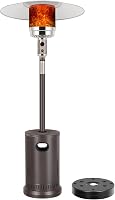
Amazon Basics 46,000 BTU Propane Patio Heater
 Best for supervised family seating
Haimmy 42-Inch Infrared Patio Heater
Electric patio heater vs propane: what is the main difference?
Propane carries its fuel with it; electric depends on a suitable outlet. That difference shapes placement, upkeep and the work required before each session.
A propane heater burns gas, so you need an approved outdoor location, a properly connected tank and a refill plan. Electric removes the tank task but adds a cord route and circuit requirements.
Both types can provide radiant warmth. “Infrared” describes a way heat reaches people and surfaces, while “propane” describes a fuel, so those terms aren't direct opposites.
| Product | Best for | Heat source | Output | Placement | Our score |
|---|---|---|---|---|---|
| Amazon Basics 46,000 BTU Propane Patio Heater | patios without outlets | Propane gas | 46,000 BTU | Freestanding outdoor tower | 9.2 |
| Haimmy 42-Inch Infrared Patio Heater | supervised family seating | Electric | 1,500 watts | Floor-standing tower | 8.2 |
| Vagkri 42-Inch Infrared Patio Heater | angled seating layouts | Electric | 1,500 watts | Floor-standing tower | 8.0 |
How should you compare electric patio heater vs propane output?
Compare usable warmth at your seats, rather than choosing the biggest number. BTUs and watts can be converted into the same units, but output still doesn't tell you how much heat reaches each person.
A heater's shape, direction and distance from your chair matter. A high-output tower across the patio can be a worse match than a smaller heater correctly aimed at a nearby seat.
Wind also changes the result by carrying away warmed air and increasing heat loss from your body. Infrared warmth reaches people directly, but no heater makes strong wind irrelevant.
Start with your occupied seating area, then check what size patio heater you need. Avoid treating an indoor room-coverage figure as a reliable outdoor comfort map.
Which type fits your seating layout?
Electric suits a defined seating spot; propane suits open layouts where outlet access is poor. Sketch the chairs, table, walking paths and possible heater locations before choosing.
For electric, draw the cord route too. A heater that fits beside a chair can still be unsuitable if its cord must cross the doorway or run beneath a rug.
For propane, allow space around the whole tower and overhead. The Amazon Basics model measures about 32.1 by 32.1 by 91.3 inches, so check its fit beneath nearby branches and beside furniture.
The Haimmy measures 9.6 inches deep, 12 inches wide and 42 inches high. Its smaller footprint helps beside seating, but the required clearance area will be larger than the base.
For a dining table, consider where legs, chairs and people block direct warmth. Don't assume one heater placed at the end will make every seat equally comfortable.
Who should buy the Amazon Basics propane tower?
Choose the Amazon Basics for an open patio without convenient power, especially if you can keep a regular refill routine. Its 46,000 BTU output is adjustable, and Amazon Basics specifies warmth up to a 9-foot radius.
Wheels help you position the tower before use. They don't make it suitable for steps, soft ground or moving while hot.
It requires a separate 20 lb liquid propane tank. A tank-securing chain, water box for weighting the base and tilt safety shutoff support proper setup, but they don't remove the need for stable placement.
Skip it for a tight balcony, enclosed porch or location where people must squeeze past the heater. Also skip it if carrying, storing and refilling a tank would keep you from using it.
Read how long a propane tank lasts on a patio heater before buying. Plan around your usual session length rather than assuming a tank lasts a fixed number of evenings.
Who should choose the Haimmy electric tower?
Choose the Haimmy for a supervised seating area where control locks and automatic shutoffs matter. It includes a remote, a safety lock, tip-over and overheat protection, plus a timer adjustable from 1 to 9 hours.
The lock helps prevent children or pets from changing the controls. It doesn't make hot surfaces safe to touch, so keep the heater outside their reach and away from play routes.
Its fanless design suits conversation without added fan noise. Position it toward the people who need warmth, with furniture clear of its heating face.
Skip it if the only available outlet would require an unsafe cord route. It's also a poor fit for a group spread around several distant seating zones.
For regular use, check how much an electric patio heater costs to run. A lower setting may suit a mild evening once you have the heater correctly placed.
Who should choose the Vagkri electric tower?
Choose the Vagkri when nearby chairs can face its heating area. Its 100-degree heating angle makes seat arrangement more useful than placing the tower in the center and expecting warmth all around.
The remote lets you change settings without leaving your chair. Its timer ranges from 1 to 24 hours, but set it for your planned session and switch the heater off when you leave.
VAGKRI identifies this model as ETL Listed. Still check the manual for the permitted location, electrical connection and clearances before deciding where it belongs.
Skip it if people will sit behind the tower or if your layout needs warmth in several directions. Moving chairs into its forward heating area is more sensible than running it harder to compensate for poor placement.
Which heater is easier to set up?
Electric requires fewer fuel tasks when the right outlet is already nearby. Propane takes more preparation but frees you from a power cord during use.
Set up an electric heater around the circuit
Check the outlet, circuit capacity and connection instructions before assembly. Both electric towers draw up to 1,500 watts, or 12.5 amps, so other devices sharing the circuit matter.
Use the outdoor electrical protection required for your location, including GFCI protection where required. Don't use power strips or improvised adapters, and follow the manual's rules on extension cords.
Keep the cord visible and clear of doors, chair legs and walking paths. Never hide it under a rug or coil excess cable against a hot surface.
Set up a propane heater around the tank
Assemble and weight the base as instructed, then secure the correct tank. Follow the manual's leak-check procedure after connecting it; never use a flame to look for a leak.
Keep the tank valve accessible so you can shut it off without reaching through clutter. Check the hose route for pinching, strain and contact with hot parts.
If you smell gas, don't attempt ignition. Shut off the supply if safe, keep ignition sources away and follow the manual's response instructions before using the heater again.
For either type, finish positioning before switching it on. Turn it off and let it cool before moving, covering or storing it.
Which heater costs less to run?
Compare the cost of your normal evening, using local energy rates and the setting you'll actually use. Fuel type alone doesn't decide the cheaper option.
For electric, use this calculation:
Kilowatts × hours used × electricity rate per kilowatt-hour = session cost.
At full output, either electric tower uses 1.5 kilowatt-hours during 1 hour of continuous operation. A 2-hour session therefore uses 3 kilowatt-hours before you multiply by your electricity rate.
Both towers offer 9 settings from 620 to 1,500 watts. Lower settings reduce electricity use, but choose a setting that gives useful warmth at the occupied seats.
For propane, divide your refill cost by the usable fuel quantity, then multiply by expected consumption. Adjustable output changes consumption, so compare similar session lengths and realistic heat settings.
Use our electric patio heater cost guide for the electricity calculation. For the other side of the comparison, learn how much fuel a patio heater uses.
Include the practical costs too: refill trips, tank handling and any electrical work needed for a suitable outlet. A heater you can use easily may be the better choice even when its energy cost is slightly higher.
Can either heater go under a covered patio?
Only use a heater beneath a cover when its manual permits the setup. Check overhead and side clearances, ventilation and the materials around it before choosing a model.
A roof can trap heat near beams, fabric or other surfaces. Curtains and retractable screens can also change a once-open space into a more enclosed area.
Outdoor propane heaters belong outdoors, away from enclosed spaces. Never use this propane tower inside a home, garage or enclosed porch.
Electric avoids combustion at the point of use, but still needs clearance and a safe electrical connection. The Haimmy and Vagkri have IPX5 water resistance, which doesn't make every outlet, plug connection or weather condition safe.
Read the covered-patio safety guide before placing either type beneath a roof or awning. The exact model's manual decides whether your setup is suitable.
What care does each heater need?
Electric needs cord and surface checks; propane adds hose, regulator and tank checks. Inspect either heater before use, especially after storage or a move.
For electric, unplug it and let it cool before cleaning. Remove dust as the manual directs, and stop using it if the cord, plug or housing is damaged.
For propane, check the hose and connections for damage and keep burner openings clear according to the manual. Store cylinders upright outdoors in a location allowed by local rules, away from ignition sources.
Keep both types stable and protected when idle. Shutoff sensors are backup protections, so don't use them as a reason to leave a heater on uneven ground.
Cover a heater only after it has cooled fully. Our guide to whether you need a patio heater cover explains how to plan protection between uses.
At the start of the colder season, inspect the whole setup again. Furniture, plant growth and stored items may have changed the clear space around last season's heater location.
What mistakes lead to the wrong heater choice?
Buying before checking placement is the biggest mistake. Start with a safe location and work backward to fuel type, output and controls.
- Heating empty space: Aim warmth at occupied seats rather than a distant corner of the patio.
- Ignoring the circuit: A reachable outlet isn't proof that the shared circuit can support a heater.
- Overvaluing a timer: Choose a shutoff time that matches your session, and remain nearby while the heater runs.
- Treating wheels as a stability feature: Use a firm, level surface and follow base-weighting instructions.
- Buying for windy evenings: Reconsider outdoor plans when conditions make safe, comfortable use impractical.
- Forgetting storage: Decide where the cool heater, cord or propane cylinder will go before delivery.
Don't solve weak warmth by moving a heater inside its required clearance zone. Adjust seating within the permitted setup, reduce the area you're trying to warm or choose a different heater style.
Electric patio heater vs propane: which should you buy?
Buy for the easiest safe setup you'll use regularly. In an electric patio heater vs propane decision, power access, seating direction and fuel handling matter more than extra control features.
Pick the Amazon Basics propane tower when you have an open patio, no convenient outlet and room to handle a tank. Pass if its height, clearance needs or refill routine don't fit your space.
Pick the Haimmy when suitable power is near a fixed seating spot and you value its control lock and automatic shutoffs. Keep adult supervision and clear walking routes part of the setup.
Pick the Vagkri when your chairs fit within its forward heating area and remote adjustment suits your routine. Its longer timer range shouldn't drive the purchase if you'll only use short sessions.
If none fits your patio safely, choose a different heater style before buying. Use patio heaters explained: propane, electric and infrared for the broader options, or compare infrared vs propane patio heaters to clarify heat method and fuel.
Frequently asked questions
Is a propane or electric patio heater better?
Electric is the better fit for a regular seating spot near suitable power; propane suits an open patio away from outlets. Choose by placement first, then compare controls and fuel tasks.
Neither type is a good buy if you can't meet its manual's clearance and connection requirements.
Does a propane patio heater warm a larger area?
A high-output propane tower is worth considering for a spread-out outdoor seating area, but fuel type alone doesn't establish coverage. Amazon Basics specifies up to a 9-foot radius for this model.
Wind, distance and seating position still affect comfort, so don't treat that radius as a promise of equal warmth everywhere.
Is an electric patio heater cheaper to run?
Electric can cost less for short, focused sessions, but the result depends on local energy costs and the heat setting you use. Multiply kilowatts by hours and your electricity rate.
Compare that total with propane consumption and refill cost for the same length of use.
Can you use a propane patio heater under a covered patio?
Only consider a covered patio if the heater manual permits that setup and you can meet every clearance and ventilation requirement. Check the roof, nearby walls and any curtains or screens.
Read our guide to patio heater use under a covered patio before choosing a location.
Can you use a patio heater indoors?
Never use an outdoor propane patio heater indoors, in a garage or in an enclosed space. Electric heaters also need approval for the intended location and proper clearances.
Check the model's manual, then read our guide to whether a patio heater can be used indoors before moving one inside.