Can You Use a Patio Heater Indoors?
You can use a patio heater indoors only if its instructions allow your intended indoor use. Keep outdoor propane patio heaters outside because of carbon monoxide and fire risks.
On this page (9 sections)
- Can you use a patio heater indoors?
- Why are propane patio heaters dangerous inside?
- Which of these heaters fits your space?
- How do you choose an electric heater for indoor use?
- What should you check before setting up an indoor heater?
- Which common mistakes should you avoid?
- How should you care for an electric patio heater?
- What should you do if you already used a patio heater indoors?
- Can you use a patio heater indoors safely?
You can use a patio heater indoors only if its instructions allow your intended indoor use. Outdoor propane patio heaters belong outside because they can produce carbon monoxide and create a fire risk.
For indoor warmth, choose by the allowed setting, placement, and electrical supply before comparing heat output. A heater that fits beside your sofa may still need clearances or mounting space your room can't provide.
Can you use a patio heater indoors?
An outdoor propane patio heater must stay outside, while some electric models permit indoor use. A garage, shed, tent, or enclosed porch doesn't become a suitable operating space just because you open a door.
Check the instructions for the exact model before buying or moving it inside. Weather protection, a safety shutoff, and a small footprint don't establish permission for indoor use.
Our guide to propane, electric, and infrared patio heaters explains the main types if you're still deciding which category fits your space.
Can you use a propane patio heater indoors with ventilation?
No amount of improvised ventilation makes an outdoor propane patio heater an indoor appliance. Don't rely on a cracked window, open garage door, exhaust fan, or carbon monoxide alarm to make that use acceptable.
A carbon monoxide alarm is a warning device, not permission to operate outdoor fuel-burning equipment inside. Keep the heater outdoors and follow its instructions for distance from doors, windows, and vents.
Why are propane patio heaters dangerous inside?
Carbon monoxide and fire are the main risks when outdoor propane patio heaters operate indoors. Carbon monoxide has no smell or color, so the absence of an odor doesn't mean the air is safe.
Tall heaters also put intense heat near ceilings, shelves, curtains, and stored items. A tip-over shutoff addresses one hazard; it doesn't control exhaust or make nearby materials safe.
The Centers for Disease Control and Prevention explains how fuel-burning equipment can cause indoor carbon monoxide poisoning in its carbon monoxide safety guidance.
Headache, dizziness, nausea, weakness, or confusion can signal exposure. Leave for fresh air immediately and call emergency services if exposure is suspected, even if symptoms seem mild.
Which of these heaters fits your space?
The Amazon Basics model suits outdoor patio seating, while the Hykolity and SereneLife electric models offer indoor options subject to their instructions. Choose between a fixed wall installation and a standing heater based on where people sit and how they move through the room.
Amazon Basics: choose it for an outdoor seating area
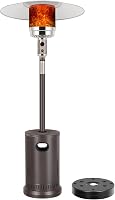
The Amazon Basics 46,000 BTU Propane Patio Heater suits buyers who want outdoor warmth without placing an electric cord across the patio. It requires a 20 lb liquid propane tank, sold separately, and has adjustable output.
Its wheels help with positioning, while the water box adds base weight and the included chain secures the tank. Move it only when it's off and cool, following the manual's directions.
Skip it for any indoor heating plan, including an enclosed porch or garage. At 91.3 inches tall, it also needs careful overhead clearance checks outdoors; its height alone doesn't tell you how much space is required above it.
Read how to light a patio heater before the first start, and follow this model's manual for assembly, connection checks, and ignition.
Hykolity: choose it for a fixed seating spot
The Hykolity 1500W Wall-Mount Infrared Patio Heater suits a seating area where you can install heat in a fixed position. Its 3 power levels, remote, and timer let you adjust output without moving a floor unit.
Wall mounting keeps the heater's base out of the walkway, but the wall and mounting hardware still need to meet the installation requirements. Confirm the required height, clearances, and outlet location before choosing the spot.
Skip it if you can't mount it as directed, or if you need warmth in several changing locations. Don't improvise a stand or place a wall-mount heater on furniture.
The timer helps limit a session, but it doesn't make unattended operation appropriate. Switch the heater off when you leave rather than relying on a later timer shutoff.
SereneLife: choose it for a small personal zone
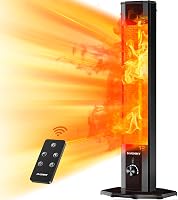
The SereneLife 900W Infrared Patio Heater suits someone who wants a standing option beside a small seating area. Its 9 x 9 x 37.4-inch body is easier to plan around than a tall propane tower.
SereneLife describes coverage of up to 15 square feet, so choose it for a close seating zone rather than expecting it to warm a large room evenly. The remote lets you adjust it without leaning toward the heater.
Skip it where children, pets, or foot traffic make floor placement hard to control. Its guard and safety cutoffs don't remove hot-surface risks or the need for open space around it.
How do you choose an electric heater for indoor use?
Choose an indoor-permitted model that fits your seating position and room layout. Infrared heat works best when its path to the person is clear, so a unit hidden behind furniture is a poor choice.
Think about what needs warming: a person reading in one chair, a workbench position, or an entire room. The wall-mounted option fits a repeat seating position; a standing model allows placement changes where its instructions permit them.
Don't choose solely by wattage. Available clearance, a suitable outlet, and the heater's position may rule out a model before its output matters.
Compare formats in our electric patio heater guide. For running costs, use our electric patio heater cost guide with your electricity rate and planned hours of use.
What should you check before setting up an indoor heater?
Confirm the allowed room, mounting method, clearances, and power supply before assembly. Measure the usable space with furniture in place rather than judging an empty corner.
Use this setup order:
- Read the manual. Find the indoor-use instructions and any restrictions for damp areas or garages.
- Measure clearances. Check the required space above, beside, behind, and in front of the heater.
- Choose the support. Use the required wall mounting or a firm, level floor, as directed.
- Plan the cord route. Keep it clear of hot surfaces, rugs, doors, and walking paths.
- Check the outlet. Match the manual's electrical requirements and avoid sharing a circuit with other heavy loads.
- Clear the heat path. Move curtains, paper, bedding, and furniture out of the required space.
Plug portable electric heaters directly into a suitable wall outlet rather than a power strip. If the cord won't reach, change the placement or have a suitable outlet installed instead of stretching a cord across the room.
For outdoor placement beneath a roof, read our guide to patio heaters under a covered patio. A covered patio needs its own checks for clearance and enclosure.
Which common mistakes should you avoid?
The biggest mistakes are assuming electric means suitable everywhere and treating safety features as substitutes for careful placement. Indoor permission still comes with limits for the room, installation, and nearby materials.
Avoid these shortcuts:
- Choosing by weather protection alone. An IP rating doesn't establish indoor permission or allow every wet location.
- Heating a garage near flammable vapors. Gasoline, solvents, and similar materials can make the setting unsuitable.
- Drying clothes on the heater. Fabric can block heat or touch hot surfaces.
- Moving a hot unit. Turn it off and let it cool before repositioning.
- Leaving it running during sleep or absence. Remain present and switch it off when finished.
- Restarting after repeated shutoffs. Find the cause using the manual rather than repeatedly switching it back on.
Keep children and pets away from the heater, including guarded surfaces. Arrange seating so nobody needs to reach over it or squeeze past it.
How should you care for an electric patio heater?
Switch it off, unplug it, and let it cool before cleaning according to the manual. Remove dust from accessible surfaces without spraying water or cleaner into openings.
Check the cord, plug, housing, and mounting points before use. Stop if you notice damage, scorching, a burning smell, or an unusually hot plug or outlet.
Keep the heater dry during storage and protect the cord from crushing or sharp bends. Don't cover it until it has fully cooled, and remove any storage cover before operation.
What should you do if you already used a patio heater indoors?
If an outdoor propane patio heater was used indoors, get everyone outside into fresh air immediately. Call emergency services if anyone has symptoms or you suspect carbon monoxide exposure.
Don't delay leaving to turn off the heater, open windows, or retrieve belongings. Don't re-enter until emergency responders say the space is safe.
If it was an electric model, confirm that its instructions permit your indoor setup before using it again. Stop using any unit with damaged parts or signs of overheating.
Can you use a patio heater indoors safely?
For indoor use, choose Hykolity for an approved fixed wall installation or SereneLife for a small personal seating zone with safe floor clearance. Keep the Amazon Basics propane model for outdoor patio use.
If neither electric model fits your room's mounting, clearance, or outlet requirements, choose another indoor heating appliance. Don't force a patio heater into an unsuitable space.
For outdoor placement, check patio heater clearance under a covered patio. If stability is your next concern, our patio heater tip-over switch guide explains the feature's limits.
Frequently asked questions
Can you use a propane patio heater indoors?
No, keep outdoor propane patio heaters outside, including when a garage door or window is open. Burning propane can produce deadly carbon monoxide, and nearby objects can catch fire.
For indoor warmth, choose a heater whose instructions allow the room and installation you have in mind.
Can you use an electric patio heater inside?
Yes, but only if that exact model's instructions allow indoor use in your intended setting. Electric heaters don't burn propane at the appliance, but hot surfaces and electrical faults remain hazards.
Check mounting requirements, clearances, and outlet needs before buying, then follow the manual during setup and use.
Is it safe to use a patio heater in a garage with the door open?
No, an open garage door doesn't make an outdoor propane patio heater safe indoors. Exhaust can collect, and stored fuel or other flammable materials add hazards.
An electric heater also needs approval for that setting; indoor use alone doesn't mean it belongs near gasoline, solvents, or flammable vapors.
What should I do if a patio heater was used indoors?
If an outdoor propane patio heater was used indoors, move everyone outside into fresh air immediately. Call emergency services if anyone has symptoms or you suspect carbon monoxide exposure.
Don't delay leaving to turn off the heater or collect belongings, and don't re-enter until emergency responders say it's safe.