Do You Need a Patio Heater Cover?
A patio heater cover is useful when your heater stays outdoors between uses. Choose one by shape and measured size, then put it on only after the heater is fully cool and dry.
On this page (7 sections)
- When does a patio heater cover help?
- Should you cover a patio heater while it's warm?
- How do you choose a patio heater cover that fits?
- Which patio heater covers suit different buyers?
- What matters beyond waterproof fabric?
- How should you put on and care for the cover?
- Which patio heater cover should you choose?
A patio heater cover is useful when your heater stays outdoors between uses, especially where rain, dust, sunlight, or snow can reach it. Choose by the heater's shape and measurements, and put the cover on only when the appliance is fully cool and dry.
The right cover should go on without pulling hard, fasten securely, and come off easily enough that you'll use it regularly. A poor fit can catch on the reflector, flap in wind, or leave part of the heater exposed.
When does a patio heater cover help?
A cover helps most when the heater lives outside, including on a roofed patio with open sides. Wind can still carry rain, leaves, and dust beneath a roof.
For frequent use, look for a cover you can remove and store without a struggle. For seasonal storage, pay closer attention to weather exposure and access for periodic checks.
If you move the heater into a dry, protected storage area after every use, a weather cover may be less useful. Follow the manual's storage rules, including separate instructions for propane cylinders or electrical connections.
Should you cover a patio heater while it's warm?
Wait until the whole heater is fully cool, including its reflector or glass tube. A cool base doesn't mean the upper parts are ready to cover.
Follow the shutdown sequence in the manual, and don't use a fixed waiting time as proof that the heater is cool. Weather and heater design affect how quickly heat leaves the appliance.
Remove the cover completely before starting the heater again. Keep the removed fabric away from the burner, reflector, and required clearance area.
For overhead clearances, see whether you can use a patio heater under a covered patio. If you're learning the controls, read how to light a patio heater alongside your manual.
How do you choose a patio heater cover that fits?
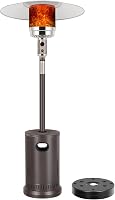
Match the shape first, then measure the widest parts. A tall round cover and a pyramid cover aren't interchangeable just because their heights are close.
Measure from the top of the heater to the bottom of its base. Then measure the reflector diameter on a round heater, or the widest width and depth on a pyramid model.
Include protruding parts such as wheels, handles, or a side table if they must sit inside the cover. Don't measure only the central pole or the narrowest part of the cabinet.
Compare those measurements with the cover's stated fit limits, which can differ from its outer dimensions. You need enough room to lower the fabric over the heater without stretching it across edges or forcing the zipper.
Too much spare fabric is also a problem because it can flap and catch wind. Aim for a close fit with room to handle the cover, rather than choosing the largest size available.
If you're unsure which shape you have, our pyramid versus mushroom patio heater guide explains the differences.
Which patio heater covers suit different buyers?
The Hualedi suits a compatible round heater and a simple cover routine, while the round QH.HOME adds more fit adjustment. Amazon Basics suits taller compatible round heaters, and the pyramid QH.HOME is the shape-specific choice.
Hualedi patio heater cover for a simple routine
Choose the Hualedi for a round heater when you want a zipper and a separate bag for storing the removed cover. Its Oxford fabric has a waterproof coating, and a buckle strap helps secure it.
This is a practical choice if you uncover the heater often and have somewhere dry to keep the bag. Open the zipper fully before lifting the cover over the reflector instead of dragging closed fabric across its edge.
Skip it for a pyramid heater or a round model that presses tightly against its stated dimensions. If your main concern is loose fabric around the middle, consider the adjustable round QH.HOME option below.
Hualedi allows cleaning with water. Let the cover dry before packing it into its bag, even if you're putting it away for only a few days.
QH.HOME round cover for adjustable fit
Choose the round QH.HOME when you want to reduce loose fabric around a compatible mushroom-style heater. Its middle adjustments let you gather the cover closer to the body after it is in place.
It uses 500D Oxford cloth and a YKK zipper, with Velcro tightening at the bottom. QH.HOME describes the fabric as tear-resistant and UV-resistant, useful priorities for an exposed storage spot.
Skip it if your heater needs a taller cover or has a shape that prevents the straps from closing properly. Adjustments help manage spare fabric, but they cannot correct a cover that is too small.
Fasten the strips without pulling the fabric tight against sharp edges. They also don't anchor the heater, so follow the appliance's wind precautions regardless of how snug the cover feels.
Amazon Basics cover for taller round heaters
Choose Amazon Basics when a taller round heater needs coverage and its base fits within the stated limits. Its extra height doesn't make it a better fit for every large heater.
It fits heaters up to 95 inches high, with a 34-inch dome and a 17-inch round base. Check that base measurement carefully, since a wider cabinet can rule it out even when the top fits.
The cover is water-resistant, with interlocking seams and an undercoating that helps limit rain entry. It suits buyers who want everyday or off-season coverage and can inspect the heater after wet weather.
Skip it if you need a cover described as waterproof or your base exceeds its fit limit. Amazon Basics also advises choosing a cover at least 2 inches larger in length and width than the appliance.
QH.HOME pyramid cover for square-base heaters
Choose the QH.HOME pyramid cover for a compatible tall, square-base heater. Its shape makes it the relevant option here for pyramid models with a central glass tube.
Like the round QH.HOME, it uses 500D Oxford cloth and a YKK zipper. QH.HOME describes it as waterproof and UV-resistant, and the bottom fastening lets you tighten the opening after fitting it.
Skip it for mushroom-style heaters or pyramid models whose widest parts exceed the cover's dimensions. Check upper corners and any projecting hardware as well as the base.
Lower it gently without pushing sideways against the heater. When removing it, release the bottom fastening and open the zipper first so the fabric lifts freely.
What matters beyond waterproof fabric?
Fit, fastenings, and dry storage matter alongside water protection. A waterproof label doesn't prevent damp air from condensing beneath a cover or water entering through an opening.
After prolonged wet weather, inspect beneath the cover when conditions allow. If the heater or cover is damp, let both dry before covering again.
In sunny spots, UV resistance is a useful feature to compare, but it doesn't establish how many seasons a cover will last. Watch for fading, brittle patches, and cracks in the coating as it ages.
For windy locations, close straps as designed and move the heater to shelter when its manual calls for it. Our guide to keeping a patio heater from tipping over explains why securing the cover is only part of the job.
How should you put on and care for the cover?
Start with a cool, dry heater and fully open fastenings. Brush away leaves and loose dirt before lowering the cover over the top.
Work the fabric down gently, keeping it clear of projecting parts. If it catches, lift and reposition it instead of pulling harder.
Use suitable access equipment on a firm, level surface if you cannot reach safely from the ground. Avoid leaning on the heater or tugging against it while reaching overhead.
Secure the bottom fastening without dragging the fabric tightly across edges. Before leaving, check that the cover isn't caught under a wheel or hanging where it will sit in standing water.
Clean according to the cover's care instructions, and avoid assuming it is machine washable. Inspect seams, fastenings, and the zipper during cleaning so you can spot damage before the next wet spell.
For broader advice on matching the appliance to your space, read how propane, electric, and infrared patio heaters differ.
Which patio heater cover should you choose?
Choose Hualedi for a simple round-heater cover routine, or the round QH.HOME when middle adjustments would help control spare fabric. Choose Amazon Basics for a taller compatible round heater, and the pyramid QH.HOME for the matching square-base shape.
Rule out any patio heater cover that doesn't fit before comparing fabric or closures. If the heater must be forced into it, or the cover cannot fasten properly, choose another size.
After storage, remove the cover and check the heater as its manual directs before use. If it starts but keeps going out, follow our guide to why a patio heater won't stay lit instead of repeatedly relighting it.
Frequently asked questions
Do you need a cover for a patio heater?
A patio heater cover is useful when the heater stays outdoors between uses, where rain, dust, sunlight, and debris can reach it. A heater stored in a dry, sheltered space may need only a dust cover.
Follow the heater's storage instructions, and cover it only when fully cool and dry.
Can you cover a patio heater while it is warm?
No. Wait until every part of the heater is fully cool before putting on its cover, including the reflector and any glass tube.
Follow the manual's shutdown steps rather than relying on a fixed cooling time.
Remove the cover completely before lighting or powering the heater again.
Should a patio heater cover be waterproof?
For a heater exposed to rain, choose a cover intended to keep water out, while also checking fit and closures. Waterproof fabric does not prevent condensation beneath a cover or water entering through an opening.
Start with a dry heater, inspect it after wet weather, and follow its storage instructions.
Can a patio heater stay outside in winter?
A patio heater can stay outside in winter only if its manual allows that storage arrangement. A cover helps shield the appliance, but it does not replace instructions for fuel, electrical parts, wind, or snow.
For seasonal storage, shut it down correctly, let it cool and dry, and check it periodically.