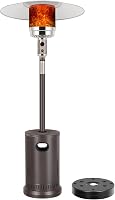
Pyramid Patio Heater vs Mushroom Heater: Which Is Better? (October 2026)
For pyramid patio heater vs mushroom, choose a pyramid when the flame display matters and a mushroom when you prefer reflector-style heating around seating. Buy the model that fits your clearances, seating plan and storage space.
On this page (9 sections)
- Pyramid patio heater vs mushroom: what changes besides the shape?
- Which style fits the way you use your patio?
- Which of these 3 heaters suits your priorities?
- Which heater will keep your chairs warmer?
- How much space do you need around either shape?
- How should you assemble and start a propane patio heater?
- What care makes either heater easier to live with?
- What mistakes should you avoid with either style?
- Which should you choose: pyramid or mushroom?
Choose a pyramid patio heater for its visible flame and a mushroom heater for a reflector-focused seating setup. In a pyramid patio heater vs mushroom decision, start with how you gather outdoors, then check whether the heater fits safely beside those seats.
A flame tower suits evenings where the heater also serves as a visual centerpiece. A mushroom model suits buyers who care more about directing warmth around a seating area than watching a tall flame.
Both styles need an open outdoor location, safe clearances and room for people to pass. The right choice should work with your patio as it is, without blocking a doorway or forcing chairs into awkward positions.
 Best for flame-focused gatherings
Pamapic 89-Inch Pyramid Patio Heater
 Best for warmth-first seating
Hykolity 50,000 BTU Propane Patio Heater
Pyramid patio heater vs mushroom: what changes besides the shape?
The main difference is a visible flame tube versus an overhead reflector. A pyramid puts the flame on display, while a mushroom places its burner beneath a broad cap that helps direct heat toward the surrounding area.
That changes what you get from the heater even before you consider output. A pyramid can give guests something to gather near, while a mushroom has a more practical role beside outdoor seating.
Neither shape turns an open patio into a heated room. Expect a useful warm zone near the heater, with comfort falling as you move away or wind crosses the space.
What does “tower” mean for pyramid and mushroom patio heaters?
“Tower” describes a tall, upright heater, so pyramid and tower are overlapping terms. It does not identify a separate fuel type or guarantee a particular heat pattern.
Look at the burner, reflector and overall proportions rather than choosing by name. A tall heater without enough room above it is a poor fit, whatever the box calls its shape.
Our guide to the best pyramid patio heaters compares more flame-tube options if that display is central to your choice.
Which style fits the way you use your patio?
Choose a mushroom for a regular seating zone and a pyramid when the flame display earns its space. For either style, plan around occupied chairs and walking routes rather than an empty patio.
A dining setup needs room for guests to pull chairs back. A lounge setup needs a safe gap from cushions, throws and side tables, including when someone shifts furniture during the evening.
For gatherings where people stand and move around, place the heater outside the main route between the house, food and seating. Guests should not need to squeeze past a hot surface to reach a chair.
Who should buy a pyramid heater?
Buy a pyramid if you want warmth and a visible focal point during outdoor dinners or relaxed gatherings. The flame column is the main reason to choose this shape over a plain burner-and-reflector design.
It makes the most sense when you can leave a suitable spot clear for it. You should also have a practical place to store the tall unit and a safe route for moving it.
Skip a pyramid if the flame display adds little value for you. Its glass tube introduces another part to protect during movement and clean according to the manual.
Who should buy a mushroom heater?
Buy a mushroom if your main aim is warming a defined seating area and you prefer the familiar reflector design. Adjustable output is useful when the evening starts mild and gets cooler.
This style suits buyers who want the heater to support the gathering without being its visual centerpiece. Check the cap's width as well as the base when planning its position.
Skip it if a visible flame column is your main goal. Also skip any model whose reflector would crowd a roof edge, umbrella or branch at the required clearance.
Which of these 3 heaters suits your priorities?
Choose Pamapic for a flame-centered patio, Hykolity for reflector-style heating, or Tangkula for a flame tower with variable control. Each fills a different role, so start with the feature you will use most.
Pamapic: for a planned gathering spot
The Pamapic suits buyers who want a substantial flame tower as part of their outdoor setup. Its quartz glass tube and hammered bronze finish make the heater a visible part of the space.
It measures 21 x 21 x 89.4 inches and weighs 61.7 pounds, so plan both its standing position and its storage route. Wheels help with repositioning, but steps and rough paving still deserve thought.
A side-access door gives access to the standard 20 lb propane tank, which is not included. Pulse ignition, a weighted base and an included cover round out the practical features.
Skip it if you need to carry the heater up steps after every use. A tall, heavy unit is better suited to a location with a straightforward rolling route.
Hykolity: for a seating area without a flame tower
The Hykolity suits buyers who want a mushroom reflector and adjustable warmth beside their chairs. Its 50,000 BTU output is the highest stated output among these 3 options.
Battery-free piezoelectric ignition removes an ignition battery from your supplies list. Wheels and an included cover help with routine movement and protection between uses.
At 32.5 pounds, it is lighter than the Pamapic, although weight alone does not make a tall heater easy to move. Check the assembled dimensions and the route through gates before choosing a storage spot.
Skip it if you would be disappointed without a long glass-tube flame display. Its appeal is the reflector layout and simple heat control.
Tangkula: for a flame display with low-to-high control
The Tangkula suits buyers who want a pyramid flame effect and a variable control knob. It has 45,000 BTU output, a magnetic tank-access door and an included zippered cover.
Its base measures 20.5 x 20.5 inches, and the heater stands 89 inches tall. The pulse igniter requires an AAA battery, which is not included.
The glass tube and aluminum top are parts to account for during assembly and storage. Leave enough room to handle the tall frame without striking a doorway or overhead object.
Skip it if your layout depends on a precise coverage promise. Tangkula describes a 17-foot heat range without identifying that distance as a radius or diameter.
Which heater will keep your chairs warmer?
Choose by distance, exposure and heat control, with output as one part of the decision. BTU measures heat output, not the temperature you can expect at a particular chair.
A higher-output heater has more heat available, but that does not ensure every guest gets more warmth. A distant chair in moving air can feel cooler than a nearer chair beside a lower-output unit.
Coverage claims also need context. Hykolity claims up to 200 square feet, while Pamapic claims a heated area up to 15 feet in diameter.
Those figures are not a fair head-to-head comfort measurement. They use different descriptions and do not establish equal weather, seating distance or warmth at the edge.
Start by identifying the seats you want to use most often. Our guide to what size patio heater you need helps you plan around that occupied area.
If your chairs are spread across a large patio, pulling them into a smaller group may be more useful than choosing by output alone. Keep every chair outside the heater's required clearance zone.
How much space do you need around either shape?
You need the heater's footprint plus its full clearance area. The small square beneath a pyramid is not the amount of patio space it needs to operate.
Measure from the heater's relevant surfaces as directed in its manual. Account for roof edges, fences, plants and furniture, including cushions or umbrellas that could move closer during use.
Leave access to the controls and tank door without reaching across hot parts. Also preserve an easy exit from the seating area.
For a deck, confirm that the manufacturer permits the surface and location. Our guide to outdoor heaters for decks covers the placement questions to settle before buying.
A covered patio requires a separate check. Read our guide to using a patio heater under a covered patio before assuming either shape belongs beneath a roof.
How should you assemble and start a propane patio heater?
Assemble the heater where you have room to support its tall parts, then complete the manual's connection and startup checks. Do not rush assembly to have it ready just as guests arrive.
Lay out the hardware first and protect the glass tube or reflector from knocks. Follow the specified assembly order and tighten fasteners as directed so the frame stands correctly.
Before connecting propane, inspect the hose and connections for damage. Use only the tank, regulator and connection arrangement approved for that heater.
Perform the manual's leak check after making the connection, using its approved method. Never use a flame to look for a leak.
Learn the ignition sequence before opening the gas supply. If ignition fails, follow the required shutdown and waiting steps rather than pressing the igniter repeatedly while gas continues to flow.
Our guide to how to light a patio heater explains the general process. Keep your model's instructions available for its exact control sequence.
What care makes either heater easier to live with?
Let the heater cool fully before cleaning, moving or covering it. A simple shutdown and storage routine matters more than choosing a weather-resistant finish.
Inspect the burner area, air openings and hose as the manual directs. Dust, debris and insect activity can cause problems, especially after the heater has sat unused.
Clean a pyramid's glass only with the approved method and materials. Avoid striking it with furniture or exposing hot glass to cleaning water.
Check the frame, wheels and fasteners periodically, especially after moving the unit. If a part is damaged or the heater stops operating normally, stop use until the cause is resolved.
All 3 models include covers, but a cover is not an anchor. Follow the storage instructions when strong wind is expected, and store propane cylinders only in an approved location.
What mistakes should you avoid with either style?
Avoid buying by shape, coverage or safety features alone. The most common planning errors come from overlooking how the heater will be used after it arrives.
- Measuring only the base. Include the reflector, required clearances and room to pass with chairs occupied.
- Expecting whole-patio heat. Plan a comfortable seating zone instead of trying to warm every corner.
- Using screens as a quick wind fix. Adding walls or curtains can reduce ventilation and create new clearance problems.
- Moving a running heater. Shut it down and let it cool before repositioning it.
- Covering it too soon. Wait until all hot parts have cooled fully.
- Ignoring tank access. Leave room to reach the door and controls without moving furniture against the heater.
Safety devices are backups, not placement tools. The Pamapic includes tip-over shutoff, flame-failure protection and an overheat guard.
Tangkula includes shutoff beyond a 45-degree tilt, flame-out protection and oxygen depletion protection. None of those features permits indoor use or removes the need for ventilation.
Never run an outdoor propane patio heater in a home, garage or enclosed porch. Our guide to whether you can use a patio heater indoors explains the fire and carbon monoxide risks.
Which should you choose: pyramid or mushroom?
Make your pyramid patio heater vs mushroom choice by deciding what deserves the space beside your seats. Choose a pyramid when watching the flame is part of the evening, and choose a mushroom when reflector-style warmth is your main aim.
Pick the Pamapic for a dedicated gathering spot with a practical rolling route. Pick the Hykolity for adjustable mushroom heating, or the Tangkula for a flame tower with variable control.
Skip both styles if the location cannot meet the manual's requirements or if storage makes every use a chore. The broader patio heaters explained guide can help you choose another format.
Once propane and placement are settled, compare the best propane patio heaters. Make your final check with a tape measure, occupied chairs and a clear storage plan.
Frequently asked questions
Is a pyramid patio heater warmer than a mushroom heater?
A pyramid heater is not automatically warmer than a mushroom heater. Burner output, reflector design, seating distance and wind determine how useful the heat feels.
Choose a mushroom for a reflector-focused seating setup or a pyramid when the visible flame is also part of what you want.
Do pyramid patio heaters heat in all directions?
Some pyramid heaters spread warmth around the central tube, and Tangkula describes its model as providing 360-degree heating. That describes direction, not equal comfort at every distance.
Arrange chairs within a useful distance while keeping all required clearances, and expect exposed seats to lose warmth in wind.
Which patio heater takes up less space?
Neither shape always needs less usable patio space. A pyramid may have a compact base, while a mushroom reflector extends above its stand, but both need clear space beyond their physical dimensions.
Measure the assembled heater, its required clearances and the walking route before deciding which fits.
Can you use a propane patio heater under a covered patio?
Use one under a covered patio only if its manual allows that location and every ventilation and clearance requirement can be met. A roof can collect heat, while enclosed sides can restrict ventilation.
Neither a tall flame tube nor a mushroom reflector makes a propane heater suitable for an enclosed porch.
Does a pyramid patio heater need a cover?
A cover helps protect a pyramid heater between uses, but it does not replace proper storage or routine care. Turn the heater off and let it cool fully before covering it.
Follow its manual for cleaning, tank handling and storage, and do not assume a covered heater is secure in strong wind.