5 Best Infrared Patio Heaters (October 2026)
The best infrared patio heaters include the Haimmy 42-Inch Infrared Patio Heater for changing evening temperatures, the Hykolity 38.5-Inch Electric Patio Heater for simple evening routines, and the Vagkri 42-Inch Infrared Patio Heater for angled seating arrangements.
On this page (8 sections)
- Which is the best infrared patio heater for your space?
- How do you choose heat output for your seating area?
- Where should you place a tower or wall-mounted heater?
- What does weather protection tell you before buying?
- How should you set up an electric infrared patio heater?
- How do you care for an infrared patio heater?
- Which common buying mistakes should you avoid?
- Which infrared patio heater should you choose?
The best infrared patio heater for most small patio seating areas is the Haimmy 42-Inch Infrared Patio Heater. Its adjustable output, remote and safety lock make it a useful choice for evenings when you want to change the warmth without moving your chair.
Choose Hykolity for simpler controls, Vagkri for chairs spread across the heater’s front, SereneLife for a close solo seating spot, or ThermoMate for wall mounting.
Buy around where people sit, rather than the total size of your patio. Infrared heat needs a clear path to your body, so a heater behind a sofa or across a large table may disappoint.
For a broader look at fuel and heater styles, see our guide to patio heaters, including propane, electric and infrared. These picks focus on electric infrared models.
Our picks at a glance
-
1
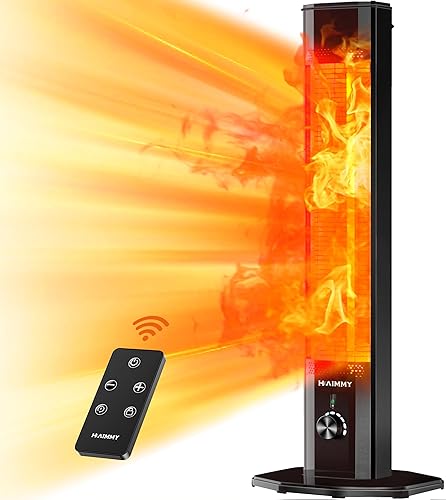 Best for changing evening temperatures
Haimmy 42-Inch Infrared Patio Heater
8.2/10 our score
See it on Amazon -
2
 Best for simple evening routines
Hykolity 38.5-Inch Electric Patio Heater
8.1/10 our score
See it on Amazon -
3
 Best for angled seating arrangements
Vagkri 42-Inch Infrared Patio Heater
8.0/10 our score
See it on Amazon
- 4
 Check it
SereneLife 900W Infrared Patio Heater
Best for solo patio seating - 5
 Check it
ThermoMate 1500W Electric Patio Heater
Best for patios needing clear floors
Which is the best infrared patio heater for your space?
Haimmy is the strongest general choice for a freestanding seating setup, while ThermoMate solves the different problem of keeping the floor clear. The other picks suit simpler controls, angled seating or a smaller personal warming area.
We compared output control, placement options, weather protection and safety features, giving preference to features that help you use the heater comfortably in an actual seating area.
Most of these heaters share the same maximum wattage. Paying attention to placement and controls will tell you more than expecting one of those models to produce much more heat than another.
| Product | Best for | Power | Heat settings | Weather rating | Our score |
|---|---|---|---|---|---|
| Haimmy 42-Inch Infrared Patio Heater | changing evening temperatures | 1500W | 9 levels, 620W to 1500W | IPX5 | 8.2 |
| Hykolity 38.5-Inch Electric Patio Heater | simple evening routines | 1500W | 2 levels | 8.1 | |
| Vagkri 42-Inch Infrared Patio Heater | angled seating arrangements | 1500W | 9 levels, 620W to 1500W | 8.0 | |
| SereneLife 900W Infrared Patio Heater | solo patio seating | 900W | IP65 | 7.8 | |
| ThermoMate 1500W Electric Patio Heater | patios needing clear floors | 1500W | 8 levels | 7.6 |
1. Haimmy 42-Inch Infrared Patio Heater
Haimmy 42-Inch Infrared Patio Heater
- 1500W maximum output
- 9 heat levels from 620W to 1500W
- 1–9 hour timer
- IPX5 water resistance
Adjustable output suits evenings that turn cooler while you sit outside. A remote, control lock and automatic safety shutoffs make it the most balanced freestanding choice here.
Pros
- Fine control over heat output
- Safety lock helps prevent unwanted control changes
- Tip-over and overheat shutoff
Cons
- Requires clear floor space
- No wall-mount option
Choose Haimmy when you want to adjust warmth as the evening cools. Its 9 output levels run from 620W to 1500W, giving you more room to find a comfortable setting than a simple high-or-low control.
That flexibility helps when one chair faces the heater directly while another sits farther away. You can adjust the output from your seat with the remote, though placement still needs to work for both people.
The 42-inch tower has a long heating tube that Haimmy describes as about two-thirds of its height. This makes it worth considering when you want warmth directed toward more than just your upper body.
Its safety lock helps prevent unwanted control changes, and the heater includes tip-over and overheat shutoff. The lock does not stop a child or pet from touching the guard or knocking the tower.
Skip Haimmy if the only clear location is on a wall or every floor position puts it beside a walkway. Its controls are useful only after you have a suitable place to stand it.
2. Hykolity 38.5-Inch Electric Patio Heater
Hykolity 38.5-Inch Electric Patio Heater
- 1500W maximum output
- 2 heat levels
- 0–24 hour timer
- Remote control
Two output choices suit buyers who prefer quick adjustments over fine control. Its automatic restart after being stood upright deserves care when moving or recovering the heater.
Pros
- Few settings to work through
- Remote and adjustable shutoff timer
- Tip-over and overheat protection
Cons
- Coarse heat adjustment
- Restarts automatically when returned upright
- Weather designation needs confirmation
Choose Hykolity if you want a simple heater for a regular sitting spot. Its 2 heat levels make sense when you prefer a quick adjustment over working through many output choices.
The remote lets you change settings without leaning toward the heater, and the shutoff timer extends to 24 hours. Use that timer as a backup for an occupied session, rather than a reason to leave the heater running after you go inside.
Hykolity includes tip-over and overheat protection, but it restarts automatically when returned upright. Turn it off and unplug it before repositioning it or checking it after a fall.
Its weather designation appears as both IPX4 and IP44, so confirm permitted outdoor exposure in the manual. Don't assume the housing, plug and outlet all have the same protection.
Skip Hykolity if small changes in heat matter to you. With fewer output choices, the lower setting may feel insufficient while the higher setting feels too warm at your preferred distance.
3. Vagkri 42-Inch Infrared Patio Heater
Vagkri 42-Inch Infrared Patio Heater
- 1500W maximum output
- 9 heat levels from 620W to 1500W
- Brand-stated 100-degree heating angle
- 1–24 hour timer
Its broad heating angle may suit chairs arranged across the front of the tower. Fine output control helps adjust warmth, but confirm its safety shutoffs before choosing it for a busy patio.
Pros
- Fine heat adjustment
- Broad heating angle claimed by Vagkri
- Remote and adjustable shutoff timer
Cons
- Floor mounting only
- Tip-over and overheat shutoff need confirmation
Choose Vagkri for seating arranged across the front of the heater, where its claimed 100-degree heating angle may be useful. That angle describes the direction of heat, rather than a promise that every seat receives equal warmth.
Its 9 power settings suit evenings when you want finer adjustment. The remote and 1–24 hour shutoff timer give you control from your chair without repeatedly approaching the tower.
Vagkri uses an aluminum body and describes this model as ETL Listed. Its indoor and outdoor designation also suits buyers who want a heater for more than one permitted location.
The important buying question is its safety shutoffs. Confirm tip-over and overheat protection before ordering, especially if pets, children or frequent foot traffic could disturb the heater.
Skip it if those protections remain unclear or you need heat behind the tower. A wide front angle does not provide warmth in every direction, and it cannot overcome a solid object blocking the path.
4. SereneLife 900W Infrared Patio Heater
SereneLife 900W Infrared Patio Heater
- 900W maximum output
- Remote control
- IP65 weather protection
- Brand-stated 15 sq ft heating range
A lower-output choice for focused warmth near one seat. Its modest claimed coverage makes more sense for a reading spot than a spread-out dining group.
Pros
- Lower maximum power draw than the other picks
- Remote included
- Tip-over switch and overheat protection
Cons
- Limited claimed heating area
- Less maximum heat for colder conditions
- Heat-setting count needs confirmation
Choose SereneLife for a single outdoor chair or similarly small warming spot. Its 900W maximum and brand-stated 15 sq ft range make it a more focused choice than the higher-output models here.
A reading chair beside a small side table is a better match than a long dining table. You still need enough space between the heater and your legs, cushions and other nearby materials.
The tower stands 37.4 inches tall, weighs 7.7 lb and includes a remote. Its aluminum reflector directs radiant heat, while the mesh guard helps limit direct access to the heating element.
A 360-degree tip-over switch and overheat protection add safeguards, but the guard can still become hot. Confirm the available heat settings before ordering because SereneLife gives both 2-setting and 3-setting descriptions.
Skip SereneLife for a spread-out group or a patio that needs substantial heat. Lower maximum consumption helps only if that output provides enough warmth for your seat.
5. ThermoMate 1500W Electric Patio Heater
ThermoMate 1500W Electric Patio Heater
- 1500W maximum output
- 8 heat levels
- IP65 weather protection
- Freestanding base and wall brackets
Included wall brackets give you an option when a floor heater would interrupt a walkway. It also comes with a base for freestanding outdoor use.
Pros
- Wall and floor installation options
- Remote, LED display and 8-hour timer
- Tip-over and overheat protection
Cons
- Outdoor use only
- Wall installation requires a suitable mounting surface
Choose ThermoMate when a wall position suits your seats better than a floor position. It includes both wall brackets and a freestanding base, giving you a choice that the other picks lack.
Wall mounting can remove a tower from the path between your door and table. Plan the heat direction first, since an available patch of wall may face away from the people who need warmth.
Its 8 heat levels, remote and LED display let you adjust output once installed. The 8-hour shutoff timer is enough for many evening sessions, although you should turn it off when you leave.
ThermoMate claims coverage up to 100 sq ft. Use that as a rough starting point, since wind, distance and obstructions determine which seats receive useful heat.
Skip this model for indoor rooms, because it is designated for outdoor use. Also choose a different setup if you cannot provide the required mounting support, electrical access or clearances.
How do you choose heat output for your seating area?
Choose enough available heat for your coldest intended use, then use lower settings when needed. Start with the seats you want to warm and the distance to a safe heater position.
Choosing the best infrared patio heater for exposed seats
An exposed seat needs more planning than a sheltered corner. Infrared transfers heat directly, but wind can still strip warmth from your body and make the same heater feel less effective.
Place chairs where they can face the heater without putting it too close. If the only safe position is far away, choosing more control settings will not solve the distance problem.
Treat advertised coverage areas as rough guidance, not equal measurements across brands. A heating angle describes spread, while a square-foot figure describes area under conditions that may differ from your patio.
Our guide to choosing the right patio heater size helps you work through layout before choosing a model.
Close personal warmth versus group seating
A single chair gives you a clear target for radiant heat. Group seating is harder because people sit at different distances and may block one another.
For a table, look at where legs and bodies sit relative to the heater. A solid tabletop can block heat from reaching the people or body areas behind it.
Don't buy a second heater until you have checked electrical capacity and safe placement for both. More units create more cord routes and clearance needs as well as more heat.
Power settings versus temperature control
Adjustable wattage controls output, not the temperature of the whole patio. An open outdoor area cannot hold a set temperature in the same way as an enclosed room.
Fine adjustment is useful when you want to soften the heat without moving the unit. Simple controls suit you better if you generally choose one level and leave it there.
For energy use, multiply power in kilowatts by running hours and your utility rate. Our guide to electric patio heater running costs walks through the calculation.
Where should you place a tower or wall-mounted heater?
Place the heater where its heat reaches occupied seats and all required clearances remain open. Check the layout with chairs pulled out and people moving around, rather than measuring only an empty patio.
When a freestanding tower makes sense
A tower suits a stable, level floor with a clear area beside the seating. It also lets you change the arrangement later, provided each new position meets the manual’s requirements.
Keep it away from door swings, chair legs and routes people use to carry food. A narrow gap may fit the base while leaving too little space for safe everyday use.
Moving a tower between locations should be a cool, unplugged task. Don't carry it by the guard or pull it into position by its cord.
When wall mounting is worth the work
Wall mounting suits a fixed seating area where a suitable wall faces the chairs. It can be the better choice when a tower would compete with diners or block access.
Check the wall material, approved mounting direction and required distances before making holes. Brackets alone do not establish that every wall or fastener is suitable.
For more installation choices, see our guide to wall-mounted patio heaters. Plan access to the controls and enough space to clean the unit after installation.
What changes under a patio roof
A covered patio still needs the heater’s approved overhead and side clearances. Curtains, roll-down shades, vines and stored cushions can change those distances after the heater is installed.
Read our guide to patio heater clearance under a covered patio before choosing a location. A roof provides shelter, but it does not automatically make every heater position suitable.
What does weather protection tell you before buying?
Weather protection describes resistance to specific exposure, not permission to leave a heater outside in every condition. The manual must also allow the location and way you intend to use it.
Haimmy and Vagkri carry IPX5 designations, while SereneLife and ThermoMate carry IP65 designations. The latter includes dust protection as well as water protection; the X in IPX5 does not specify a dust-protection level.
Neither designation makes a heater submersible. It also does not establish how its plug connection should be protected or whether outdoor storage is allowed.
Think about rain reaching the heater from the side, water splashing from the floor and pooling near the outlet. A sheltered wall location can still leave the power connection exposed.
If you plan to move the heater indoors after each use, consider the route and storage space. A short, clear carry is more practical than lifting a cooled tower around furniture every evening.
How should you set up an electric infrared patio heater?
Check assembly, electrical supply and clearances before switching the heater on. A remote and automatic shutoffs cannot correct an unstable base or an unsuitable power connection.
Assemble and inspect the heater
Fit the base, guard and other supplied parts exactly as directed. Tighten fasteners according to the instructions and make sure the tower stands upright without rocking.
Inspect the cord, plug and housing for damage before use. After a fall, stop using the heater if any part is bent, cracked or loose.
For help choosing a stable position, read our guide to keeping a patio heater from tipping over. Automatic shutoff is a backup, while placement helps prevent the fall.
Check the outlet and shared circuit
Use an outlet and electrical protection suitable for the outdoor location, following the heater manual and local requirements. Keep the connection away from standing water and protect it as required.
Several models here draw 12.5 A at full output. Check what else shares the circuit, since a heater can place a substantial load on it.
Avoid power strips, outlet splitters and improvised cable arrangements. If you cannot reach a suitable outlet, resolve the electrical supply before buying rather than assuming an extension cord will be acceptable.
Adjust the heat from a safe position
Start with the heater facing your seat at a permitted distance. Adjust output after you feel the warmth, keeping the minimum clearance even if a lower setting feels mild.
Keep the remote where you can reach it without leaning across the heater. Turn the heater off before leaving the space, even if you have set a timer.
Our guide to whether patio heaters can be used indoors explains indoor-use limits. An outdoor-rated electric heater still needs explicit approval for any indoor location you plan to use.
How do you care for an infrared patio heater?
Let the heater cool, unplug it and clean it only as its manual allows. Regular care should focus on keeping the guard clear, checking the cord and maintaining a stable installation.
Remove loose dust or debris with the approved cleaning method. Don't spray cleaner through the guard, scrub the heating element or use a hose because the housing has weather protection.
Check for leaves, pet hair and other material near the base before each session. Keep fabric covers off during operation, and wait until the heater is fully cool before covering it.
For storage, choose a dry place if the instructions call for bringing it inside. Coil the cord loosely and keep the remote with the heater so neither gets lost or damaged.
Wall-mounted heaters also need attention after rough weather. Check for loose hardware, damage or a change in angle before using the unit again.
Which common buying mistakes should you avoid?
The biggest mistake is buying for patio square footage without planning where the heat will land. Controls, timers and weather protection matter after you have established a workable position.
Expecting a tower to warm every seat
A radiant heater favors people in its path. Seats behind it, around a corner or behind solid furniture need a different position or a different heating plan.
Don't move the heater closer than allowed to compensate for a poor layout. Rearranging the chairs may solve the problem more safely.
Choosing only by the longest timer
A long timer does not increase heat output or improve placement. For an evening meal, a shorter timer may already cover the entire session.
Choose the shutoff period around your routine, then switch the heater off when you leave. Avoid treating a timer as permission for unattended operation.
Assuming a guard makes contact safe
A mesh guard helps keep objects away from the element, but nearby surfaces can still be hot. Children and pets need separation from the heater, even when a control lock is active.
If maintaining that space will be difficult, consider a suitable mounted installation. Floor models work best where people can leave them undisturbed.
Buying lower wattage only to reduce consumption
Lower power saves electricity per hour at that setting, but it also limits available heat. A heater that leaves your intended seat cold does not meet the reason you bought it.
Choose lower output for a genuinely small warming task. Choose adjustable higher output when you need more flexibility across mild and colder evenings.
Which infrared patio heater should you choose?
The best infrared patio heater is the one that fits a safe position facing your usual seats. Measure that position, check the power supply and settle the mounting choice before comparing smaller convenience features.
Pick Haimmy for changing evening temperatures and fine heat adjustment. Choose Hykolity when you prefer simple controls, or Vagkri for angled seating after confirming its safety shutoffs.
Choose SereneLife for a close solo seating spot with modest heat needs. Pick ThermoMate when wall mounting clears an important walkway and the installation requirements fit your patio.
If a suitable outlet or clear heat path is missing, revisit the heater type before ordering. Our comparison of infrared and propane patio heaters can help you choose around those limits.
Our top 3 picks at a glance
-
1
Best for changing evening temperatures
Haimmy 42-Inch Infrared Patio Heater
8.2/10 our score
See it on Amazon -
2
Best for simple evening routines
Hykolity 38.5-Inch Electric Patio Heater
8.1/10 our score
See it on Amazon -
3
Best for angled seating arrangements
Vagkri 42-Inch Infrared Patio Heater
8.0/10 our score
See it on Amazon
Frequently asked questions
Are infrared patio heaters good for outdoor use?
Yes, outdoor infrared patio heaters suit focused warmth around seating because they transfer heat directly to people and surfaces in their path. Wind still affects your comfort, and furniture can block the heat.
Choose an outdoor-approved model and follow its instructions for placement, weather exposure and clearance from nearby materials.
What wattage is best for an infrared patio heater?
A 1500W model is the stronger choice here when you want more available heat, while a 900W heater suits a smaller, close seating spot. Neither wattage guarantees a comfortable coverage area outdoors.
Choose around your chair layout, distance from the heater and exposure to wind, then check the electrical requirements.
Can an infrared patio heater go under a covered patio?
Yes, if its manual permits that installation and you can meet every required clearance from the roof, walls and nearby materials. Weather protection alone does not establish approval for a covered location.
Our guide to using a patio heater under a covered patio explains what to check before choosing a position.
Do infrared patio heaters use a lot of electricity?
At full power, a 1500W heater uses 1.5 kilowatt-hours per hour, while a 900W heater uses 0.9 kilowatt-hours. Your electricity rate and total running time determine the cost.
Lower output settings reduce consumption while selected, and our guide to electric patio heater running costs shows how to calculate your own estimate.
How do infrared heaters compare with propane patio heaters?
Electric infrared heaters suit seating near a suitable outlet, while propane models can serve outdoor locations where electrical access is inconvenient. Infrared describes heat transfer, and propane describes fuel, so those terms are not opposites.
Our guide to infrared vs propane patio heaters compares the practical choices, including placement and fuel handling.