Patio Heater vs Fire Pit: Which Warms a Patio Better? (October 2026)
For patio heater vs fire pit, choose a heater to warm existing seats or a fire pit to gather around a flame. Your seating layout, available space and fuel supply should decide which you buy.
On this page (9 sections)
- Patio heater vs fire pit: which warms people better?
- Who should buy each option, and who should skip it?
- Which patio heaters fit these seating plans?
- How much space do you need before buying?
- Which fuel and running routine suit you?
- How should you set up and care for either option?
- What mistakes lead to disappointing warmth?
- Patio heater vs fire pit FAQs
- What should you choose: a patio heater or fire pit?
Choose a patio heater to warm existing seats or a fire pit to make a flame the center of the evening. The patio heater vs fire pit decision starts with where people sit and whether you want useful heat during another activity or a fire to gather around.
For outdoor meals, a heater usually fits the routine better because it doesn't require a fire in the middle of the group. For a circle of lounge chairs and long conversations, a fire pit gives everyone a shared focal point.
Neither will make an exposed patio feel like an indoor room. Plan for nearby warmth, suitable clothing and weather that allows safe operation.

 Best for fixed seating
Hykolity 1500W Wall-Mount Infrared Patio Heater
Patio heater vs fire pit: which warms people better?
A heater suits seats spread around a table, while a fire pit suits people gathered close to a central heat source. Distance and exposure matter more than choosing the appliance with the largest output number.
Both can send radiant heat toward people nearby. Electric infrared heaters provide directed warmth, while a fire pit's shape, flame and fuel affect how warmth reaches the group.
Don't compare BTU or watt figures as if they describe the comfort of every seat. Heat sent upward, blocked by furniture or directed away from people won't solve a cold seating position.
Patio heater or fire pit for dining?
A patio heater is the stronger fit for outdoor meals when it can reach diners from an approved position. A dining table already occupies the center of the group, so adding a separate fire pit may put the flame too far from some seats.
Check the farthest chair, not just the seat nearest the heater. Tall chair backs and other furniture can interrupt the path between a directed heater and the person using that seat.
Which works better for a conversation circle?
A fire pit fits a group that wants to face the flame. Allow enough space to pull chairs back when people feel too warm without pushing them into a walkway.
Wood adds crackling and the task of tending the fire, but smoke can drive people from their seats when the wind shifts. A gas fire pit avoids wood ash, though it still requires a fuel connection and flame clearances.
For a wider overview of heater designs, see our guide to patio heater types and how they work.
Who should buy each option, and who should skip it?
Choose the appliance that fits your usual evening, rather than the largest gathering you might host once. A heater for brief meals and a fire pit for slow evenings solve different needs.
| Your situation | Better starting point | Main check before buying |
|---|---|---|
| Meals at an existing table | Patio heater | Heat can reach diners from a permitted position |
| Chairs arranged around a flame | Fire pit | Clearances leave room for chairs and walkways |
| Small patio with fixed seats | Wall-mounted electric heater | Suitable wall, mounting height and power |
| Seating that changes often | Freestanding heater | Safe positions and fuel or power access |
| Frequent wood-smoke concerns | Electric heater or gas appliance | Local rules and appliance requirements |
| No suitable clearance zone | Neither yet | Change the layout before choosing |
Skip a wood-burning fire pit if you dislike tending fuel, handling ash or storing dry wood. Also rule it out when nearby windows, neighbors or local burning restrictions make smoke a recurring problem.
Skip a wall-mounted heater if you rent and can't secure it as required, or if the seats move beyond its useful heat path. A freestanding model offers more placement choices, but still needs a stable, clear location.
If children or pets use the patio, plan how you'll keep them away from hot surfaces before buying either option. A shutoff feature or safety lock doesn't make a heater safe to touch.
Which patio heaters fit these seating plans?
The Amazon Basics suits outdoor dining, Hykolity suits fixed seats, and Haimmy suits a layout you sometimes rearrange. These are heater choices for readers who have decided they don't need a central fire.
Amazon Basics for an open dining area
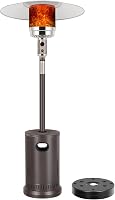
The Amazon Basics propane heater provides 46,000 BTU output, with adjustable heat and an advertised radius of up to 9 feet. Use that radius as a planning guide, rather than a promise that every seat at its edge will feel equally warm.
It needs a separate 20 lb propane tank and stands 91.3 inches tall. Choose it when your patio has the overhead room and clear floor area for a tall unit; skip it when a low roof or tight furniture plan prevents proper placement.
Its wheels help with positioning, and the water box adds weight to the base. Move it only when it is off and cool, following the handling instructions.
Hykolity for seats that stay put
The Hykolity wall-mounted heater delivers 1500W infrared heat with 3 power levels. It suits a regular bench or seating group where preserving floor space matters.
A remote and 0–24 hour timer let you adjust it from your seat. Choose the mounting position around the required height, angle and clearances, rather than placing it wherever an outlet happens to be.
Skip this design if you regularly move the gathering to another part of the patio. Once mounted, its usefulness depends on people sitting within the heat path.
Haimmy for a flexible seating corner
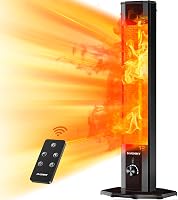
The Haimmy floor-standing heater offers 9 heat levels from 620W to 1500W and a 1–9 hour timer. Its 42-inch tower suits focused warmth near a small seating group with a safe electrical connection.
The remote and safety lock help control operation, while tip-over and overheat protection provide automatic shutoff. These features support careful use; keep the unit clear of foot traffic and supervise it while running.
Choose it when you can plan more than one suitable floor position. Skip it if reaching your chairs would require a cord across the main walking route.
How much space do you need before buying?
Measure the whole operating area, including appliance clearances, chairs and walking space. The footprint alone doesn't show whether a heater or fire pit fits.
Start by marking your normal furniture positions, then check the manual for the appliance you're considering. Include space for someone to pull out a dining chair or stand up without stepping toward heat.
For a fire pit, check the surface beneath it as well as the surrounding space. Don't assume a stone-looking tabletop or a metal base makes the appliance suitable for a wood or composite deck.
For a tall heater, measure to beams, umbrellas, branches and awnings. For a wall-mounted unit, confirm that the wall can support the required fixings and that nearby doors or furnishings won't enter its clearance zone.
A roof does not automatically rule a heater in or out. Read whether a patio heater can go under a covered patio before choosing a model for that space.
If your patio is large, focus on the seats you actually want to warm. Our guide to what size patio heater you need can help you plan around the occupied area.
Which fuel and running routine suit you?
Choose electric for convenient sessions near suitable power, propane for locations without an outlet, or wood when tending a fire is part of the appeal. Include setup and cleanup in the decision.
Electric heat avoids tank exchanges and firewood storage. Confirm the outlet, circuit and outdoor electrical protection meet the heater's instructions, and follow its rules on extension cords.
For running cost, multiply the selected wattage divided by 1,000 by hours of use, then by your electricity rate. Compare the same session length across options, rather than comparing a short meal with an all-evening fire.
Propane needs refill or exchange trips and a permitted storage location. Keep a plan for fuel availability if you host often; our guide explains how much propane a patio heater uses.
Wood needs dry storage and time to light, tend and fully extinguish the fire. A gas fire pit removes ash cleanup but still needs checks of its fuel system and burner area.
For a broader choice between heater styles, see how to choose a patio heater for a porch or deck.
How should you set up and care for either option?
Use a level, approved surface and build a short before-use check into your routine. Placement and care matter every time, even when the appliance stays in the same spot.
Before lighting propane equipment, inspect the hose and connections as directed and perform the manual's leak check after connecting fuel. If you smell gas, stop and follow the appliance's emergency instructions.
For electric heaters, inspect the cord and plug for damage and keep them away from hot surfaces and trapped doorways. Weather protection doesn't remove the need to follow the manual's electrical and storage limits.
Never bring an outdoor propane heater into a home, garage or enclosed room. Our guide explains why outdoor patio heaters should not be used indoors.
Let equipment cool before cleaning or covering it. Follow the manual for clearing debris from guards, burners and other parts, without spraying water into electrical components or gas controls.
For wood fires, use suitable dry firewood and avoid trash or treated lumber. Follow the extinguishing instructions and place fully cooled ash in a suitable metal container, away from materials that can burn.
A cover can help protect stored equipment, but only put it on a cool, dry appliance. See our guide to choosing and using a patio heater cover for storage planning.
What mistakes lead to disappointing warmth?
The biggest mistake is buying before checking placement. An appliance that can't safely reach your seats won't become useful just because its output is high.
Avoid these common errors:
- Planning around maximum coverage. Give the most-used seats priority and account for exposed edges.
- Ignoring wind. A gusty site can reduce comfort, move smoke and make operation unsuitable.
- Buying a fire pit for scattered seating. People need room to gather around it.
- Mounting an electric heater too far away. Follow its approved distance and aim before drilling.
- Treating safety features as supervision. Stay present while heat or flame is operating.
- Blocking clearances to trap warmth. Don't add curtains, screens or wind barriers that conflict with the manual.
Stop using either appliance when conditions exceed its weather limits. Trying to overcome strong wind by turning up the heat doesn't fix unstable placement or unsafe flame behavior.
Patio heater vs fire pit FAQs
The practical questions are where heat reaches and what the space permits. Resolve these before choosing fuel or appearance.
Can a fire pit go under a covered patio?
Only if the instructions and local rules permit that exact setup. Roofs and enclosed sides can trap heat or smoke, while wood fires add sparks and embers.
Don't infer permission from an open side or a high ceiling; confirm all overhead, side and ventilation requirements before use.
Will a heater warm everyone at a long table?
A heater will only help diners within its useful heat path. The far end of a long table may need a different arrangement, especially if furniture blocks radiant warmth.
Check the seating plan against the manual's guidance before assuming one unit can serve every chair.
Can you cook over either option?
Use an appliance for cooking only when it is designed and approved for that purpose. A patio heater isn't a cooking appliance, and a decorative fire pit isn't automatically suitable for food.
Check the fire pit's instructions and approved accessories before planning roasting or grilling around it.
What should you choose: a patio heater or fire pit?
For your patio heater vs fire pit decision, picture the next ordinary evening you'll spend outside. Choose a heater if you'll eat, read or talk in existing seats; choose a fire pit if gathering around a flame is the activity.
Pick Amazon Basics for a suitable open dining area, Hykolity for fixed seats beside an approved mounting location, or Haimmy for focused heat in a flexible floor layout. If none can reach your seats safely, change the layout before buying.
Choose a wood fire pit only if smoke, fuel storage and ash care fit your routine; consider gas when you want flame without handling wood. If a heater fits better, use our propane vs electric patio heater comparison to settle the fuel choice.
Frequently asked questions
Does a patio heater or fire pit warm more people?
Seating layout matters more than the category. A heater can serve existing seats if its heat reaches them, while a fire pit suits a circle of chairs.
Distance, wind and blocked heat paths affect comfort.
Map every seat before choosing, rather than relying on the appliance's maximum output alone.
Is a patio heater safer than a fire pit?
Neither removes the need for careful placement and supervision. Electric heaters avoid combustion at the appliance, but still have hot surfaces and electrical requirements.
Fire pits add flame, and wood fires can send out embers.
Choose a setup that meets the manual and keeps people clear of heat.
Can you use a patio heater under a covered patio?
Only use a heater under cover if its manual permits that installation and you can meet every clearance and ventilation requirement. Measure above and beside it, including nearby beams and fabric.
A covered patio with enclosed sides may be unsuitable even when the heater physically fits beneath the roof.
Which costs less to run, a patio heater or fire pit?
Running cost depends on fuel, output and session length. For electric heat, multiply kilowatts by hours and your electricity rate.
For propane or wood, compare fuel consumed over the same evening.
Include tank refills, wood storage and cleanup effort when deciding which option fits your routine.
Can an electric patio heater replace a fire pit?
An electric heater can replace a fire pit's warming role near suitable seating, but it won't provide a flame or a central fire feature. Choose it for short patio visits, outdoor meals or less fuel handling.
Confirm that the mounting position or floor space lets heat reach your seats.