EAST OAK 50,000 BTU Patio Heater Review: Worth It? (October 2026)
The EAST OAK 50,000 BTU Patio Heater suits open outdoor seating areas where a small table surface and adjustable base weight are useful. Buy it if you have room for its clearance requirements and can move it into storage when weather limits use.
On this page (11 sections)
- The EAST OAK 50,000 BTU patio heater at a glance
- How much patio space will it warm?
- Does the table surface replace a side table?
- How much does the weighted base help?
- What clearance and outdoor location does it need?
- How should you plan for propane use?
- Which Hykolity alternative suits which buyer?
- How should you assemble and light it?
- What care habits prevent avoidable problems?
- Which buying mistakes should you avoid?
- Should you choose the EAST OAK 50,000 BTU patio heater?
The EAST OAK 50,000 BTU patio heater is a good fit for open outdoor seating areas where its small table surface and adjustable base weight serve a clear purpose. Choose it after checking placement and storage space, rather than buying on heat output alone.
Its appeal is convenience around a seating group: reachable controls, a place for small items and wheels for repositioning once cool. An exposed patio, tight walkway or low overhead structure can rule it out before those features matter.
The EAST OAK 50,000 BTU patio heater at a glance
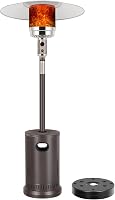
The EAST OAK combines a table-style tank housing, adjustable base weight and simple heat controls. It suits a planned seating area where you can give a tall propane heater a clear, level spot.
EAST OAK 50,000 BTU Patio Heater

- 50,000 BTU heat output
- Round table design
- Double-layer 304 stainless steel burner mesh
- Wheels and adjustable water tank
A freestanding propane heater for seating areas that could use a small table surface. An opening in the tank housing lets you reach the gas valve without lifting the housing.
Pros
- Round stainless steel surface for small items
- One-touch ignition and adjustable heat control
- Wheels for repositioning when cool
- Adjustable water tank adds base weight
Cons
- Requires substantial clearance from combustible materials
- Unsuitable for rainy days, storms or strong wind
- Tall design needs overhead space
The heater measures about 33 x 18 x 87 inches and uses a 20 lb propane tank. Allow space for the whole assembly, including the reflector, rather than measuring only the tank housing.
One-touch ignition starts the burner, and a knob adjusts output. A hole in the housing gives access to the gas valve without lifting the housing, which is useful when shutting down after an evening outside.
The double-layer 304 stainless steel burner mesh is another feature to weigh. EAST OAK describes it as more durable than a traditional single layer, but storage, exposure and maintenance still affect its useful life.
Who should buy the EAST OAK 50,000 BTU patio heater?
Buy it for a regular outdoor seating spot where you want warmth without running an electrical cord. The table surface is most useful beside chairs that lack their own convenient place for small items.
Skip it for indoor rooms, enclosed porches or areas where guests must squeeze past the heater. Also skip it if moving and storing a tall appliance would make every use a chore.
If propane refills or storage are already deal breakers, start with how to choose a patio heater for a porch or deck. Choosing the right heater type matters more than choosing between similar propane models.
How much patio space will it warm?
Plan to warm one seating group, rather than assuming the whole patio will feel comfortable. EAST OAK claims coverage up to 20 feet in diameter, but wind, outside temperature and seating position change the warmth people feel.
Its maximum output is 50,000 BTU. That figure describes heat input capacity, not a guaranteed comfort zone or a promise that every seat receives equal warmth.
Arrange chairs around the intended heating area while keeping the required clearances. Avoid placing the heater far off to one side and expecting the most distant guests to feel the same benefit as those nearby.
Radiant heat makes your position relative to the heater important. Our explanation of how a patio heater works covers the burner and reflector's roles.
For a long dining table or several separate seating groups, first decide which area needs warmth most. A single central heater may be a poor match if safe placement leaves it too far from the people using it.
Does the table surface replace a side table?
The round stainless steel tank lid can reduce the need for a separate small side table, provided you use it as directed. It is a convenience surface for a few items, not a reason to crowd guests around the heater.
EAST OAK names snacks, drinks and phones as possible uses, while also warning that radiant heat can damage nearby belongings. Follow the manual's directions for the surface and remove anything that becomes warm.
Keep the area uncluttered so you can reach the controls and gas valve quickly. Clear the surface before moving the unit, and don't lean on it or hang bags from it.
If your patio already has enough table space, this feature adds less value. Compare the other options in our best propane patio heaters guide around placement, controls and storage instead.
How much does the weighted base help?
The conical housing and adjustable water tank add support at the base, but they do not make this a strong-wind heater. Fill and secure the tank only as directed in the manual.
Choose a firm, level surface before adding ballast. Avoid loose gravel, uneven paving and spots where a wheel or base edge could sit lower than the rest.
Wheels help with a planned move across suitable ground once the heater is off and cool. They do not turn a tall heater into something you should roll around during use or drag over steps.
EAST OAK advises against operation in storms or wind above force 6. Stop sooner if gusts disturb the flame or stability, and never use added weight as a reason to keep operating.
Our guide on how to keep a patio heater from tipping over explains why placement and protection features need to work together.
What clearance and outdoor location does it need?
Keep combustible materials at least 48 inches away, then follow any further placement requirements in the manual. Check the space above, beside and beneath the heater before assembly.
Nearby cushions, curtains, umbrellas, plants and stored belongings all deserve attention. A location that looks clear in daylight may become crowded once guests pull out chairs or move furniture.
Use this propane heater outdoors only. An open door or window does not make an indoor room, garage or enclosed porch an appropriate operating space.
For a roofed area, read about using a patio heater under a covered patio before settling on a position. Resolve overhead clearance and ventilation requirements for the exact location.
EAST OAK identifies this model as ETL and CSA certified. Those certifications do not replace its instructions or make every outdoor structure suitable.
Leave a clear walking route and keep children and pets away from hot parts. The controls should remain reachable without anyone stepping between the heater and nearby furniture.
How should you plan for propane use?
Plan refills around your heat setting and evening length, rather than assuming every tank lasts the same number of sessions. A long gathering at maximum output uses fuel faster than a shorter evening at a lower setting.
Turn the output down when less warmth is needed. Keep the heater off when the seating area is empty, and follow the full shutdown sequence rather than relying only on the control knob.
Know where you will get a refill or exchange before the first gathering. Check your fuel supply ahead of time so an empty cylinder does not interrupt the evening.
For runtime estimates and the factors behind them, read how long a propane tank lasts on a patio heater. Use estimates for planning, with room for changes in settings and conditions.
Which Hykolity alternative suits which buyer?
Choose the sand-box Hykolity if a clearly specified tilt shutoff leads your decision, or the other Hykolity if battery-free ignition is your priority. Their shared output does not give either one an automatic heating advantage over the EAST OAK.
| Model | Score | Main reason to choose it | Main reason to skip it |
|---|---|---|---|
| EAST OAK 50,000 BTU Patio Heater | 8 | Small table surface and easy gas-valve access | Your space cannot meet placement requirements |
| Hykolity 50,000 BTU Sand Box Patio Heater | 8.6 | Specified flame shutoff beyond a 45-degree tilt | You cannot accommodate its full footprint |
| Hykolity 50,000 BTU Propane Patio Heater | 8.1 | Ignition without a battery to replace | You need confirmed assembled dimensions immediately |
The sand-box model pairs its shutoff with a weighted water tank and double-layer burner mesh. Its stated dimensions are 33.6 x 33.6 x 86.4 inches, so measure the reflector's footprint as well as the standing area.
Buy it if you want that specific shutoff behavior documented as part of your choice. Skip it if you expect the feature to prevent a fall, since extinguishing a flame does not hold the heater upright.
The other Hykolity uses a piezoelectric igniter and comes with a cover. Battery-free ignition suits occasional use because there is no ignition battery to replace before a cool evening.
Confirm its assembled dimensions before ordering, since the supplied measurements do not clearly establish its full standing size. Skip it if you need to fit a precise storage recess and cannot resolve that measurement first.
How should you assemble and light it?
Assemble the heater in its intended outdoor area, then complete the manual's connection and leak checks before lighting. Give yourself time to work through the instructions without guests waiting nearby.
Lay out the parts and hardware first, then follow the assembly order. Keep the reflector panels and burner parts from being bent or forced into alignment.
Check that the heater stands level and that fasteners, base components and the cylinder are secured as directed. Route the hose as instructed, away from hot surfaces and places where it could be pinched.
Use the manual's approved leak-check method, never a flame. If you smell gas, stop, shut off the supply if safe and follow the emergency directions rather than trying the igniter again.
Follow the exact lighting sequence and any waiting period after a failed attempt. Our guide to how to light a patio heater explains the process, but the model's manual takes priority.
What care habits prevent avoidable problems?
Let the heater cool fully before cleaning, moving or covering it, and inspect it before each period of use. EAST OAK recommends a protective cover for storage and advises against operating on rainy days.
Look for debris, insect nests or blocked openings around the burner and air passages. Clean only as the manual allows, without enlarging holes or altering the burner.
Check accessible hose sections and connections for visible damage. Stop using the heater if a part is damaged or the flame behaves abnormally, and follow the service instructions.
Cover it when cool and dry, and store it according to the cylinder and heater instructions. Avoid trapping moisture under a cover or assuming stainless steel burner mesh makes the entire appliance weatherproof.
Before rolling it away, remove everything from the table surface and clear the route. Plan seasonal storage around doorways and overhead obstructions, not just the floor space available.
Which buying mistakes should you avoid?
The biggest mistake is choosing by BTU alone while overlooking where the heater can safely stand. A higher output cannot fix a crowded patio, blocked walking route or unsuitable overhead space.
- Measuring only the base: account for the reflector, required clearances and chairs in use.
- Expecting equal warmth everywhere: place the heater for the seats you use most.
- Treating ballast as storm protection: follow weather limits even after filling the water tank.
- Assuming wheels solve storage: consider steps, thresholds and the height of the route.
- Rushing repeated ignition attempts: follow the shutdown and waiting instructions after a failed start.
Choose the location and storage route before ordering. Those two checks will tell you more about day-to-day suitability than a long list of shared features.
Should you choose the EAST OAK 50,000 BTU patio heater?
Choose the EAST OAK 50,000 BTU patio heater if its table surface and reachable gas valve improve a seating area you can use within the clearance and weather limits. Confirm its operating spot and storage route before committing.
Choose the sand-box Hykolity when its specified tilt shutoff matters most, or the other Hykolity when battery-free ignition is the deciding feature. If none fits your space, compare the best propane patio heaters around your actual seating layout.
Frequently asked questions
How much space does the EAST OAK 50,000 BTU patio heater need?
Keep combustible materials at least 48 inches from the heater and follow any additional clearances in its manual. It stands about 87 inches tall, so measure overhead space as well as the floor area, leaving a clear route for people and access to the gas valve.
Can the EAST OAK patio heater get wet?
EAST OAK advises against operating this heater on rainy days and recommends a protective cover for storage. Let it cool completely before covering it, and follow the manual's storage directions.
A cover protects a stored heater; it does not make operating the burner in rain appropriate.
How windy is too windy for the EAST OAK heater?
EAST OAK advises against use during storms or when wind speeds exceed force 6. Stop sooner if gusts affect the flame or the heater's stability, since a wind threshold is not a promise of suitable conditions below it.
Added base weight does not make an exposed location suitable.
Does the EAST OAK 50,000 BTU heater have a table?
Yes, the round stainless steel tank lid provides a surface for small items such as drinks or a phone. Follow the manual's directions for that surface because radiant heat can damage nearby belongings.
Keep items away from hot parts, avoid clutter and remove everything before moving the heater.